The Perth issue
Walking the Perth Hills Waterfalls After Winter Rain
The falls above Perth run for a few short weeks each winter. Here is which one to drive to, how hard each walk really is, and where to eat afterwards.

By Femke de VriesPerth on foot, ferry and bike
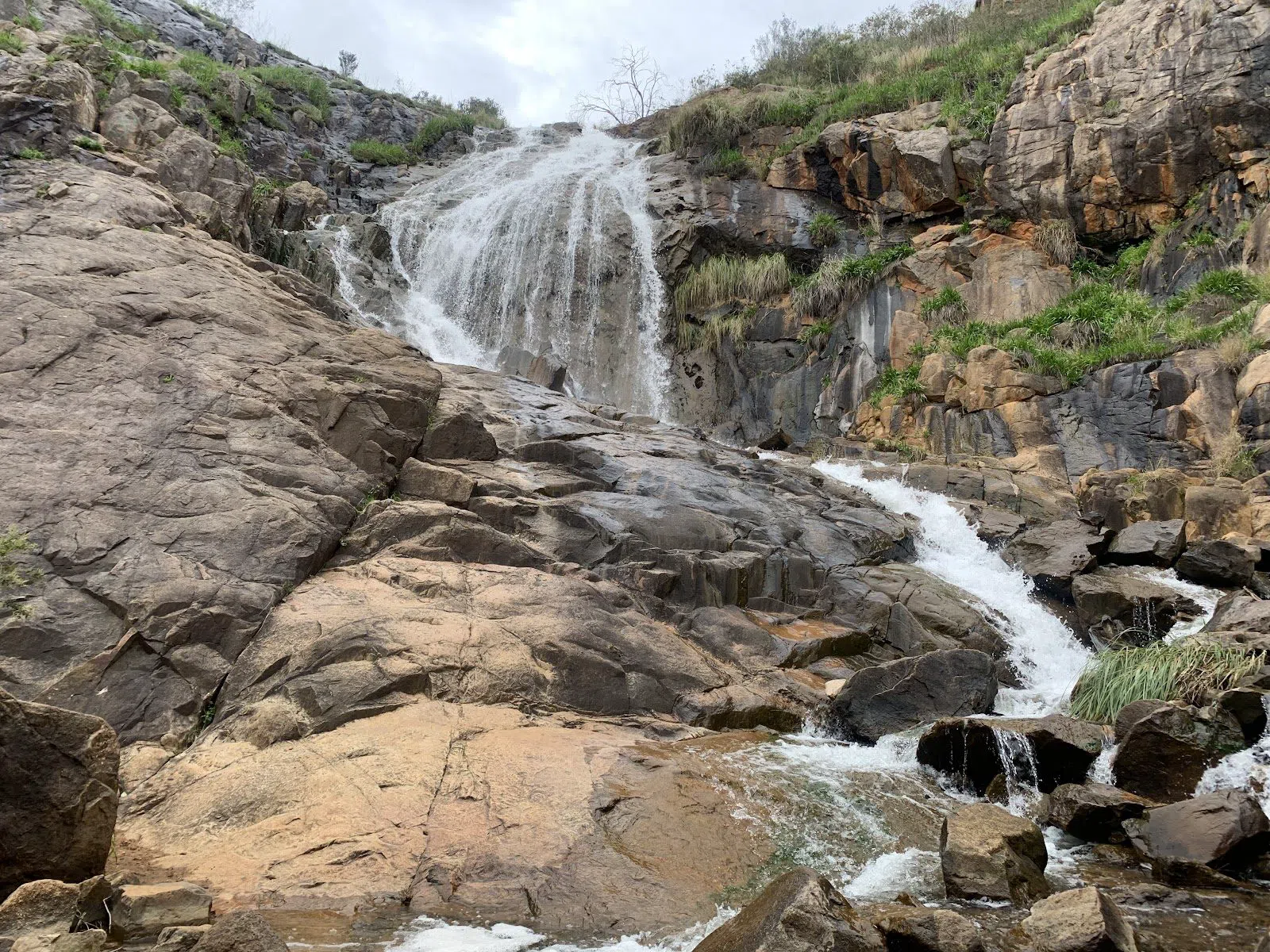
The Perth Hills only become waterfall country for a few weeks each winter, and the trigger is two or three days of solid rain on the Darling Scarp. Wait for that, and creeks that spent all summer as dry granite chutes start moving hard enough to hear from the car park. Drive up dry and you will walk a perfectly pleasant patch of jarrah forest past a damp rock, which is not why you came.
What the rain actually does up here
Every fall in this article is rain-fed and seasonal. Nothing behind them is spring-fed or released from a dam. What you see is whatever fell on the scarp in the previous few days, working its way down through granite and forest towards the coastal plain. Go within 24 to 48 hours of heavy rain, and go in the morning, because these gullies lose the light early and the whole system drains within days once the sky clears.
Two things are worth knowing before you commit to the drive. Wet granite here is slippery, and the stepped sections take twice as long to descend as the trail distance suggests, so smooth-soled trainers are a bad idea in the exact conditions that make the falls worth seeing. The steeper trails also turn to slick mud and running water at the same time, so if anyone in the group is unsteady on their feet, choose from the flat options below rather than the climbs. Nobody enjoys being talked down a loose slope.
Plan your Perth trip
Live prices from our booking partners.
Free cancellation on many rooms. We may earn a commission when you book.
The falls that need a proper downpour
Lesmurdie Falls, in Mundy Regional Park above Lesmurdie, is the best rain-fed waterfall near the city and the easiest to reach. There are two car parks, the picnic area at the top on Falls Road and a lower one on Palm Terrace, and which you use decides the shape of your walk. The Foot of the Falls trail is about 2km return and takes you down to look up at the drop, which is the view worth having; the Valley Loop is about 3km and gives you more of the park. It is free, unbooked, and no permit is needed for casual walking, so an informal group can simply turn up. The one caveat is the granite steps, which get treacherous when wet.
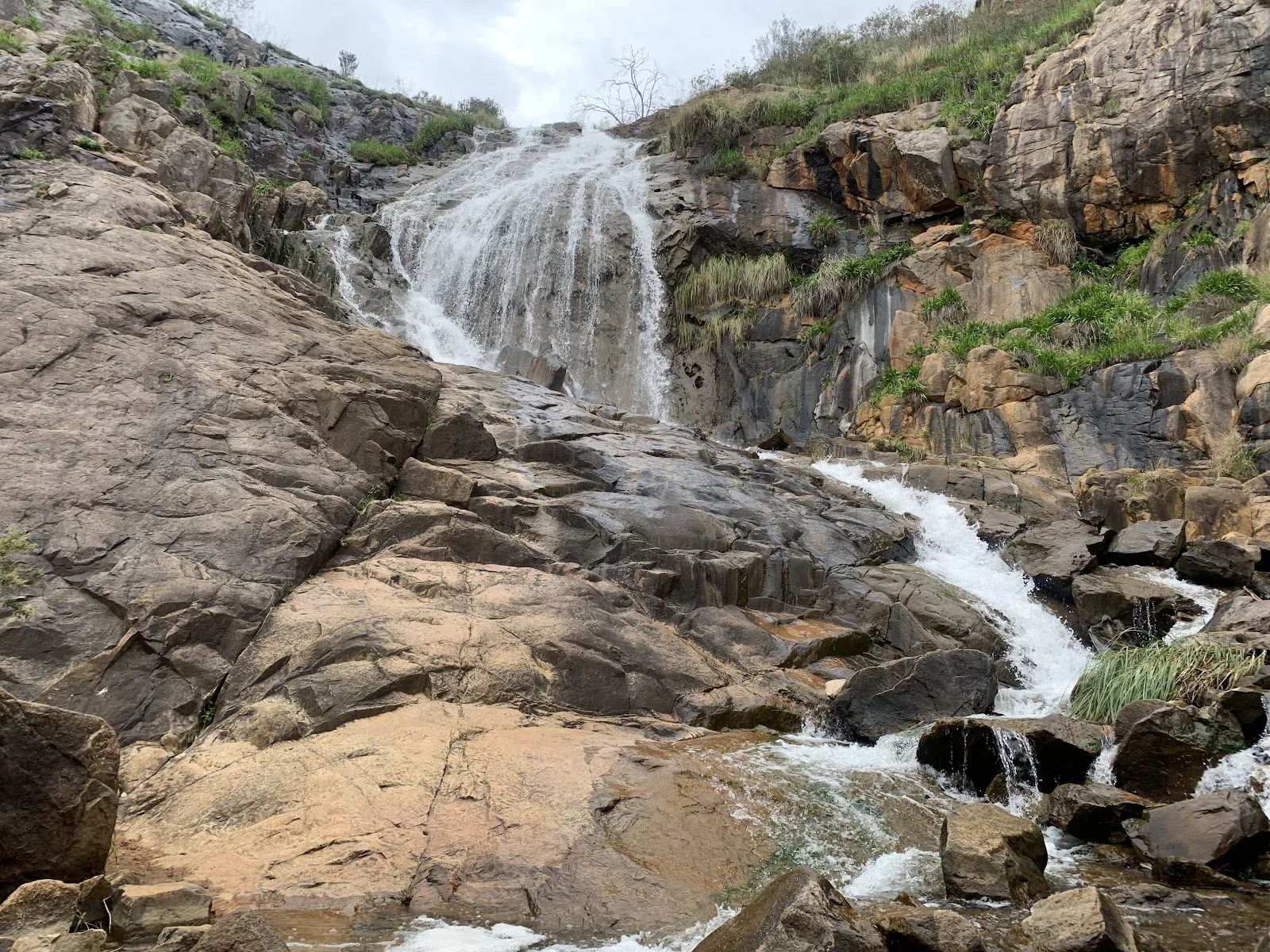
Sixty Foot Falls, in the Ellis Brook Valley Reserve at Martin, is one of the tallest falls in the hills and the most dramatic thing up here after heavy rain. It is also the most demanding. The 2.1km circuit to the top is a properly graded climb over loose rock, narrow and steep in places, and the council car park at the Valley Head end of Rushton Road is not large. Small groups are fine; a convoy is not, and neither is anyone in the wrong footwear. Free, but earn it.
Water you can count on all winter
Whistlepipe Gully Walk, in Mundy Regional Park between Kalamunda and Forrestfield, is the best value-for-effort walk in the hills. It runs 3.5km, mostly gentle, with water beside you the whole way through winter and coastal-plain views opening up on the return leg. Trailheads sit at the western end of Orange Valley Road in Kalamunda and the northern end of Lewis Road in Forrestfield. Roadside parking is limited at both, so if you are three carloads, split up and start from opposite ends. This is the Mundy Regional Park trail, not the separate Jorgensen Park walk that people routinely confuse it with.
Rocky Pool Walk, in Kalamunda National Park, starts at the northern terminus of the Bibbulmun Track in Kalamunda town, which makes it the easiest way for a visitor to say honestly that they walked a piece of a 1,000km trail. The pool fills and the brook runs properly only after winter rain, so time it the same way you would the falls. The descent is steep and loose: fine for a fit group, less fine for anyone who does not want to climb back out. Free and unbooked.
Noble Falls, off Toodyay Road, is the one I send mixed-ability groups to. The falls are visible from the car park without walking a step, and the circuit along the brook is a grade 2, 3.6km loop that welcomes dogs. The picnic reserve has electric barbecues, toilets and a playground, so half the party can stay put with a thermos while the rest walk. Wildflowers run July to October. Free.
Wide paths and easy parking for a big group
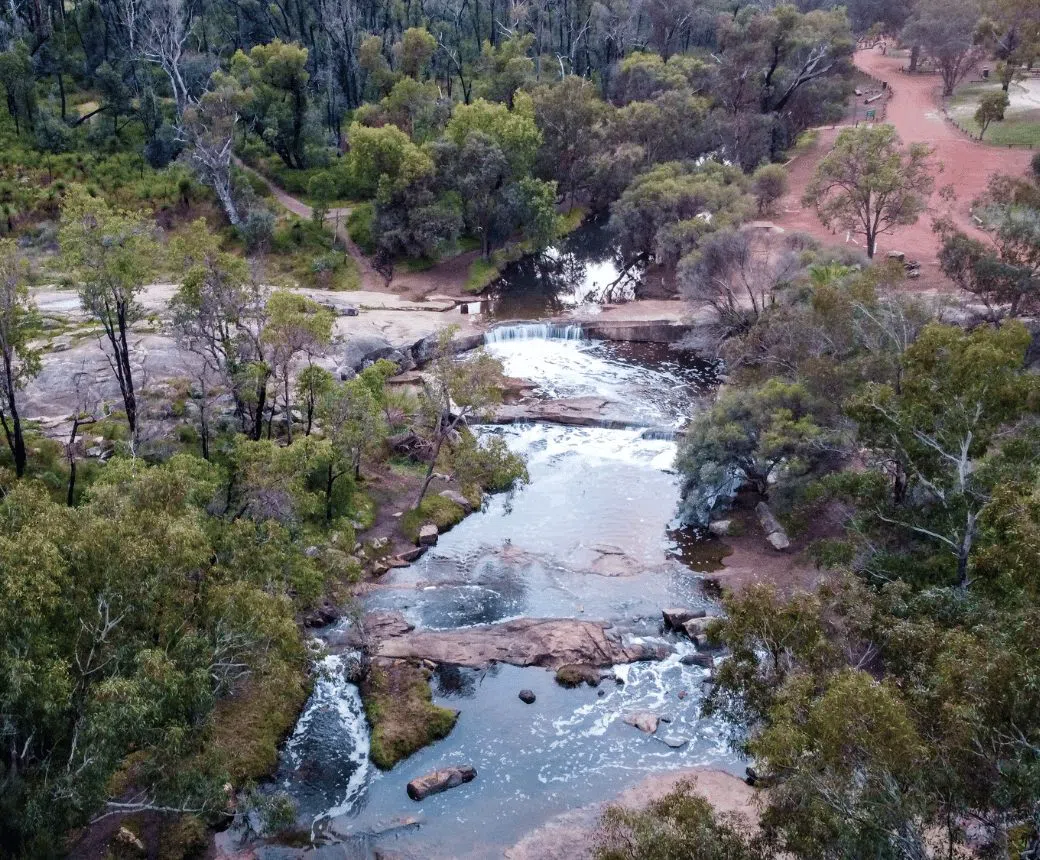
John Forrest National Park, on the Darling Scarp east of the city, is Western Australia's oldest national park and the most forgiving wet-weather option. Hovea Falls and National Park Falls sit about 2km apart along the flat Railway Reserves Heritage Trail, so you can see two waterfalls without a single serious climb. The multi-year upgrade is finished, and the Jane Brook elevated walkway was completed in 2026. Sealed roads and multiple car parks mean it absorbs groups without fuss. Entry is $17 per vehicle, charged per car rather than per head, so carpooling is the cheap way in; walking is free once you are through the gate.
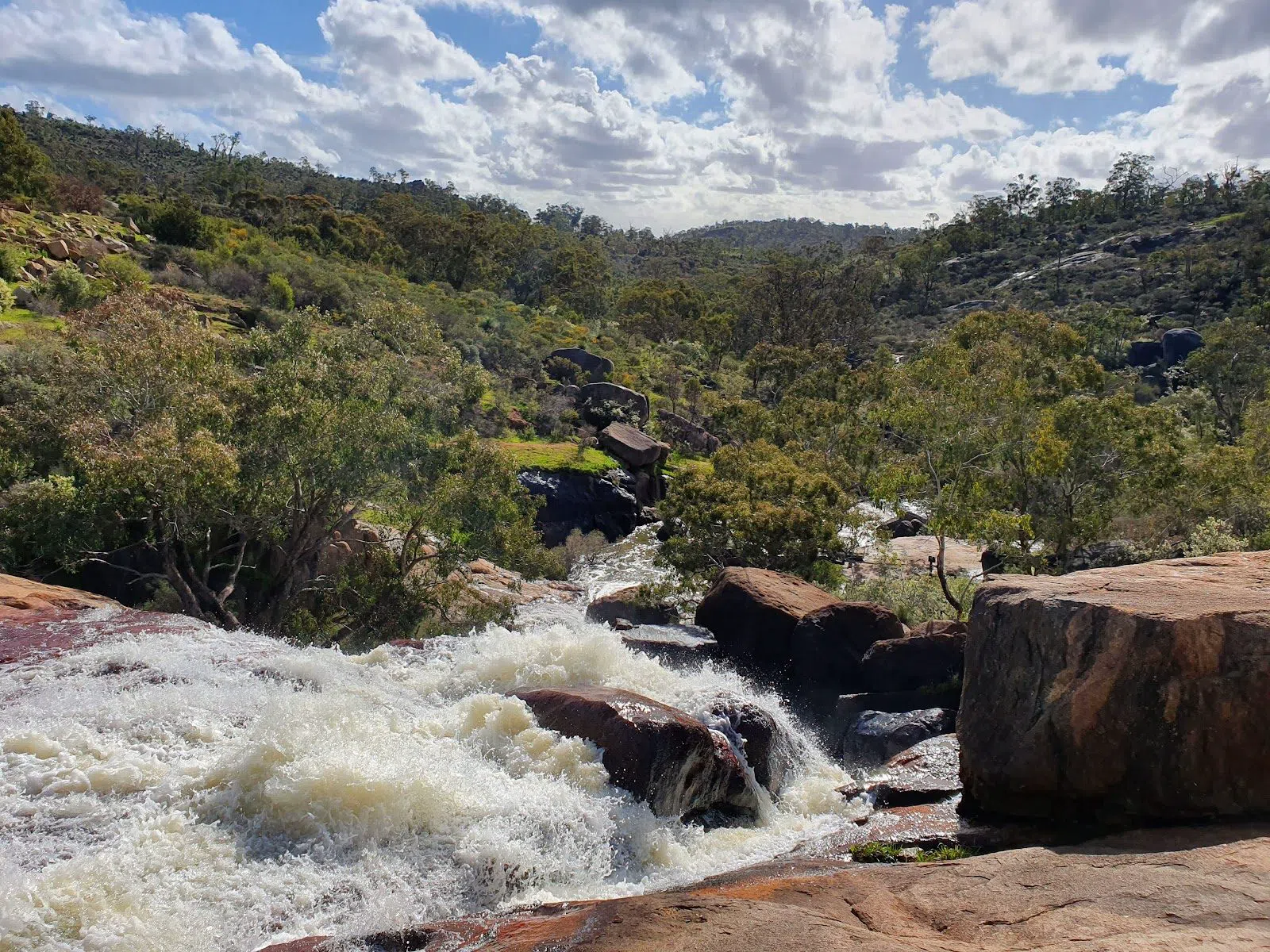
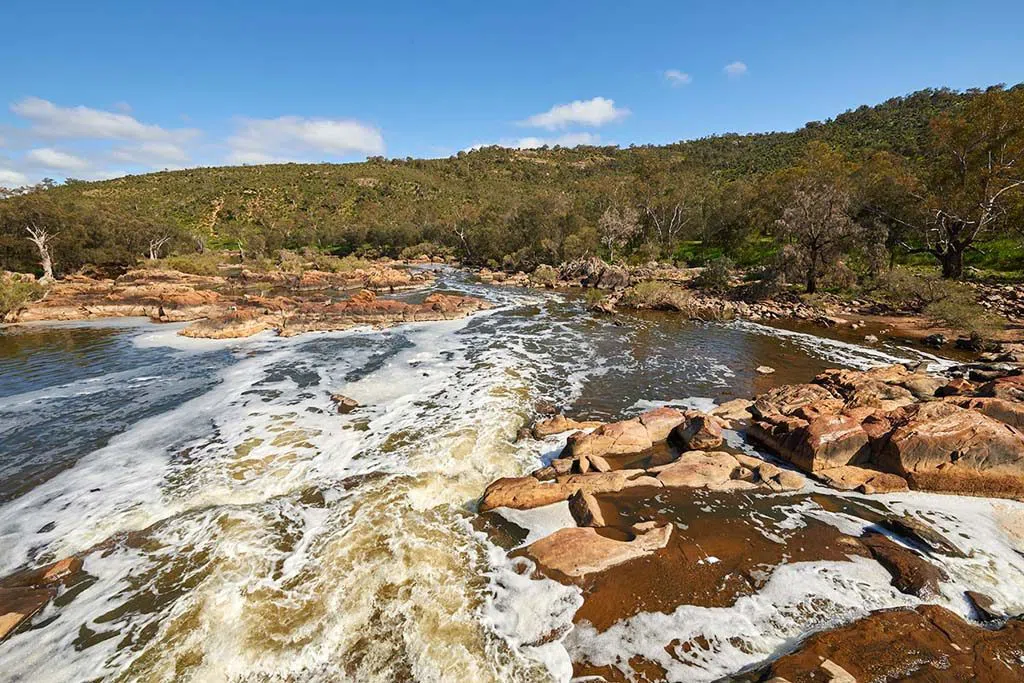
Bells Rapids Park, where the Avon and Swan rivers meet, only looks like rapids once winter rain has filled the system. There are two loops, a flat 2.5km river walk and a stiffer 3km goat walk up the ridge for the view, which lets a group split by appetite and meet back at the car park. The access road is gravel but the car park is large, dogs are welcome on lead, and it is free and open all year.
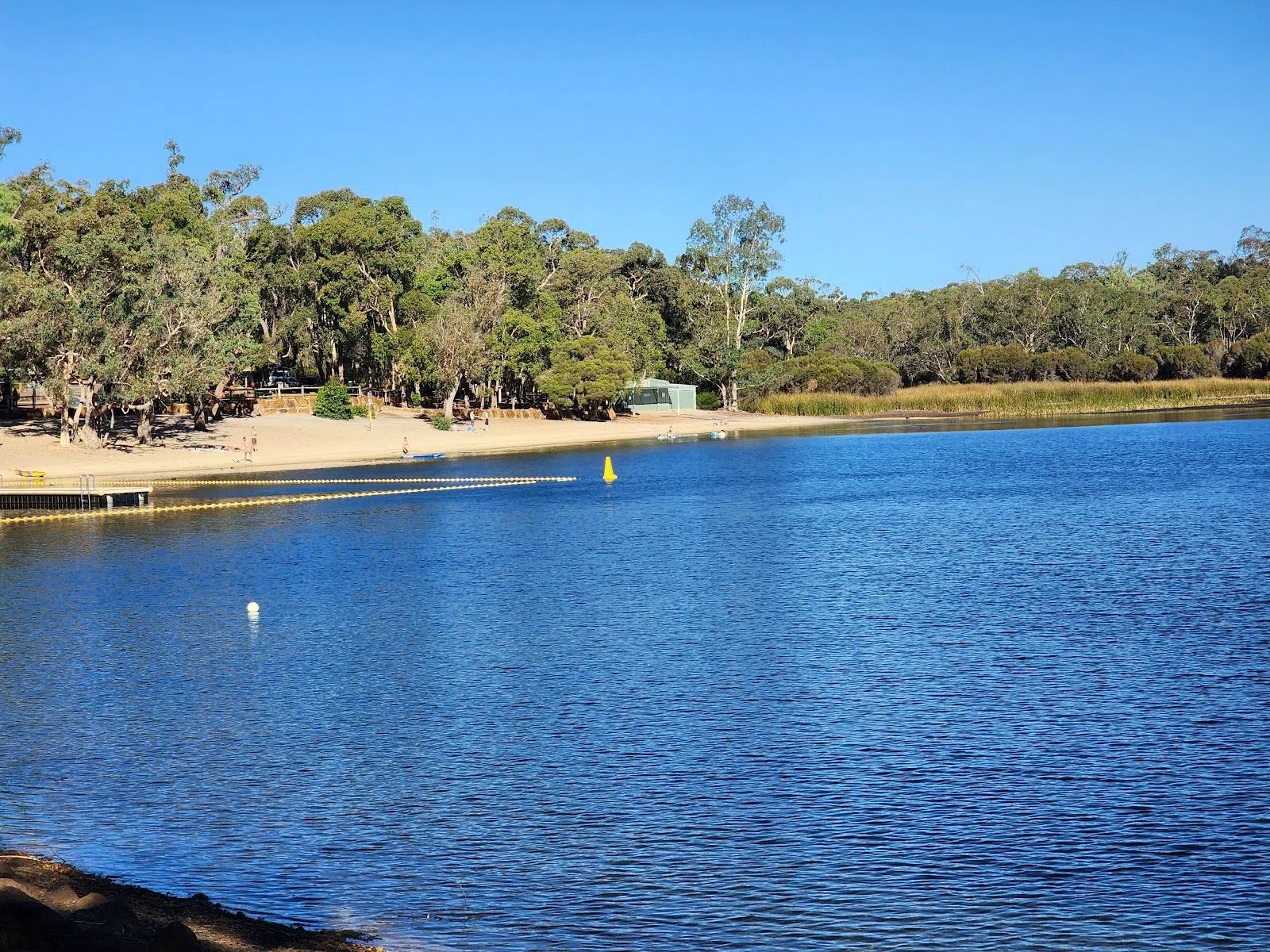
Lake Leschenaultia, at Chidlow, is the flat 3km loop that stays walkable when the steep trails have turned to mud. It is a former railway dam with big grassed areas, barbecues and camping, and it is the easiest place in the hills to park a large group. Entry is free; camping and canoe hire cost. Birders count 77 species here, and the western bank is properly dark if you are staying into the evening. It closes on high fire danger days, which is rarely the issue in a wet week but worth a check.
Serpentine Falls and the swimming you cannot do
Serpentine Falls, in Serpentine National Park, is the name most first-time visitors arrive with, and it comes with a condition. Swimming has been closed since 2025 after Naegleria fowleri was detected in the pool, and that restriction still stands. If the plan was to swim beneath a waterfall, this is not the trip for it, whatever an old photo suggests. Come for the falls themselves and the walk trails and it holds up. Gates open 8:30am to 5pm, entry is $17 per vehicle, and there is a large picnic area. The car park fills to capacity on fine weekends, so a group should be through the gate early or not bother.
When the rain wins
Some days the weather simply does not let up, and there is no shame in trading a slippery descent for something under cover.
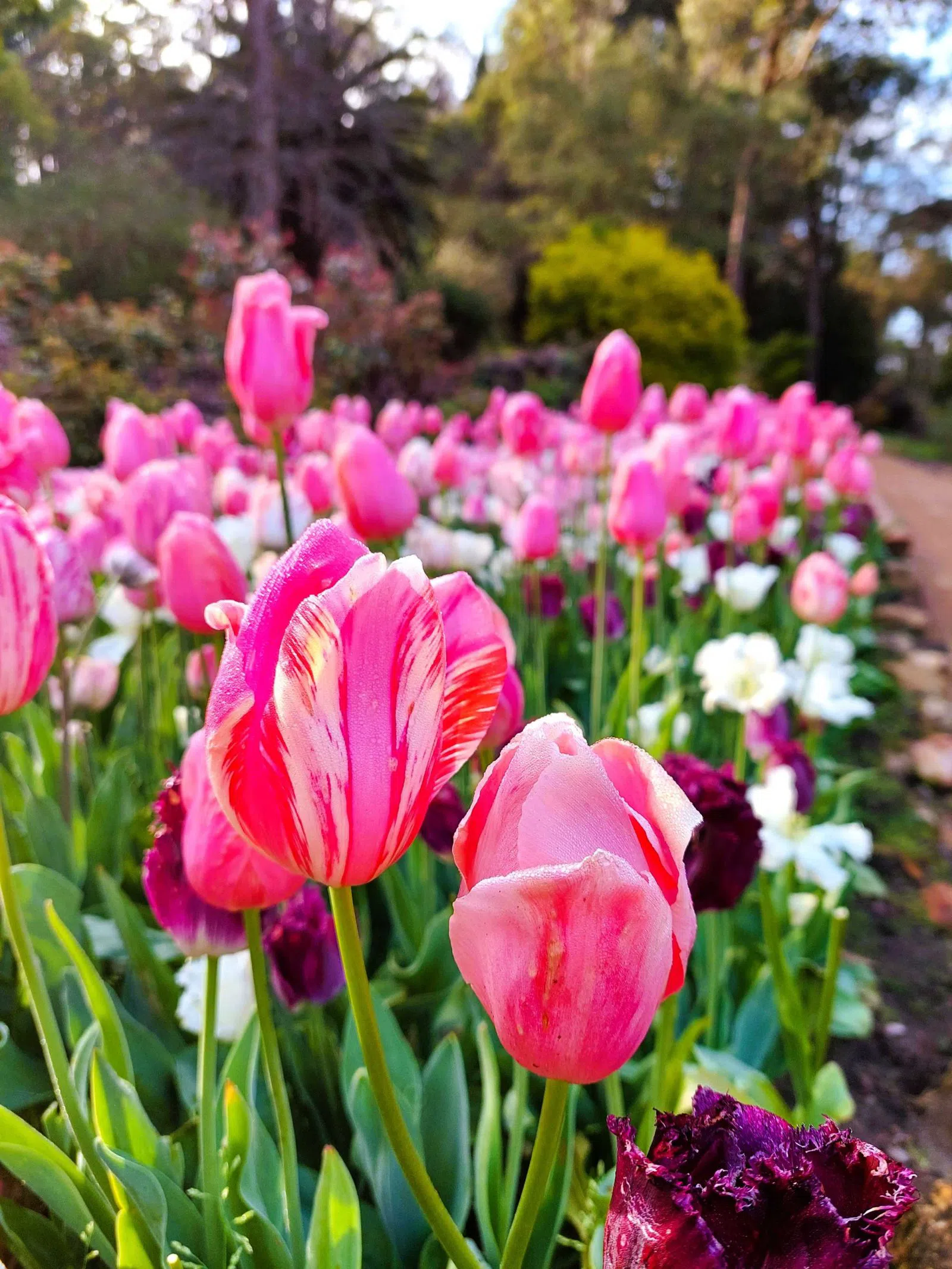
Araluen Botanic Park, in the southern hills, is the wet-day fallback. It is 14 hectares of cultivated garden set inside 59 hectares of bush, and it is at its best in exactly the weeks the falls are running: camellias from July, and the tulip display through August into September. There is a small per-person entry fee, a cafe and picnic areas, and the grounds take coach-sized groups and host weddings and corporate events, so a big booking is routine rather than a favour.
Mundaring Weir, above the reservoir, is the one piece of real history up here. The engineering story is the 560km pipeline built to carry water east to the goldfields, and you can read it off the structure itself from the Weir Walk and the O'Connor Trail. Access is free with several car parks and picnic areas, the Golden View lookout is close by, and the Bibbulmun and Munda Biddi trailheads are within walking distance of the pub. The No.1 Pump Station museum opens weekends and public holidays from 12 to 4pm for a small fee. Those are narrow hours, so build the day around them rather than hoping.

Lunch, a fire and a cider
Kalamunda Hotel, in Kalamunda town, is the obvious finish after Lesmurdie Falls or Rocky Pool. It is a heritage pub open seven days, with online table bookings and private function spaces, so a group is straightforward rather than a negotiation at the door. On Sundays it trades 10am to 11pm, and the roast with a giant Yorkshire runs all day until it sells out, which it does. You can eat it by the fire.


Mundaring Weir Hotel, a short walk from the weir itself, was built for the men who built the pipeline and is still the natural stop after the Weir Walk. Check the hours, because it closes earlier than a city pub: Monday to Friday 8:30am to 5pm, Saturday to 8pm, Sunday to 6pm. Food is mid-range, the grounds are large enough for a function, and there are ten motel-style rooms from roughly A$180 if a group would rather not drive back down the hill.
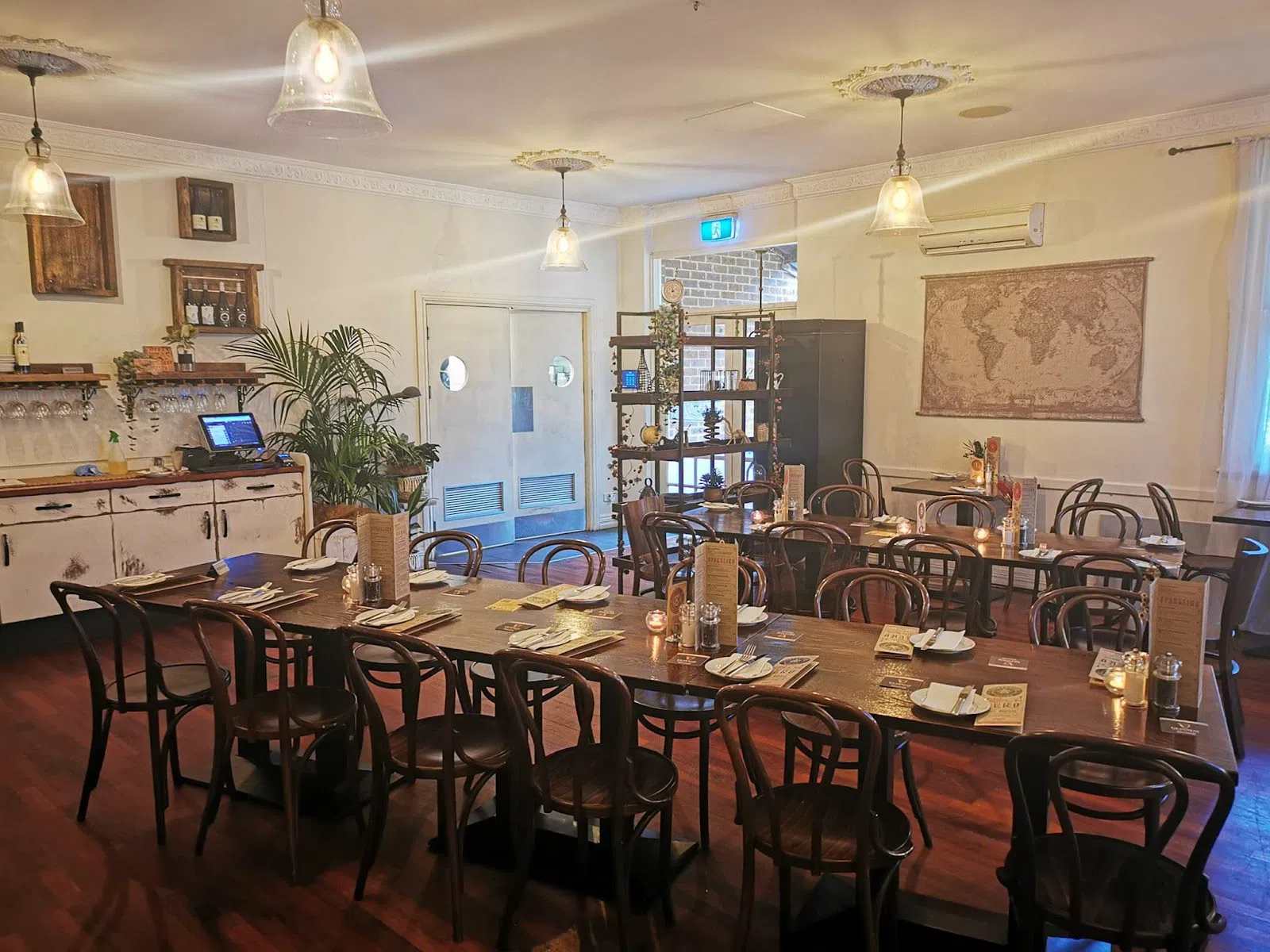
Parkerville Tavern, in Parkerville, is the prettiest building of the hills pubs and a real local rather than a tourist stop. It opens 11am to late daily with the kitchen running all day, takes bookings through its own online system, and has a functions team for private events. One current caveat matters for how you use it: the beer garden and playground are closed while upgrades are underway, so this is an indoors-only visit for now, which is no good if you have children to release or a dog in the car.
Core Cider, at Pickering Brook, sits between the Bickley Valley wineries and the Kalamunda trails, which makes it the sensible lunch anchor for a day that starts at a waterfall. The cider is made on site rather than bought in. The Orchard Bistro takes bookings with a card pre-authorisation, and the Cider Garden handles group bookings of 30 or more, the best large-group option in the hills by some distance. Call ahead rather than arriving thirty deep on spec.
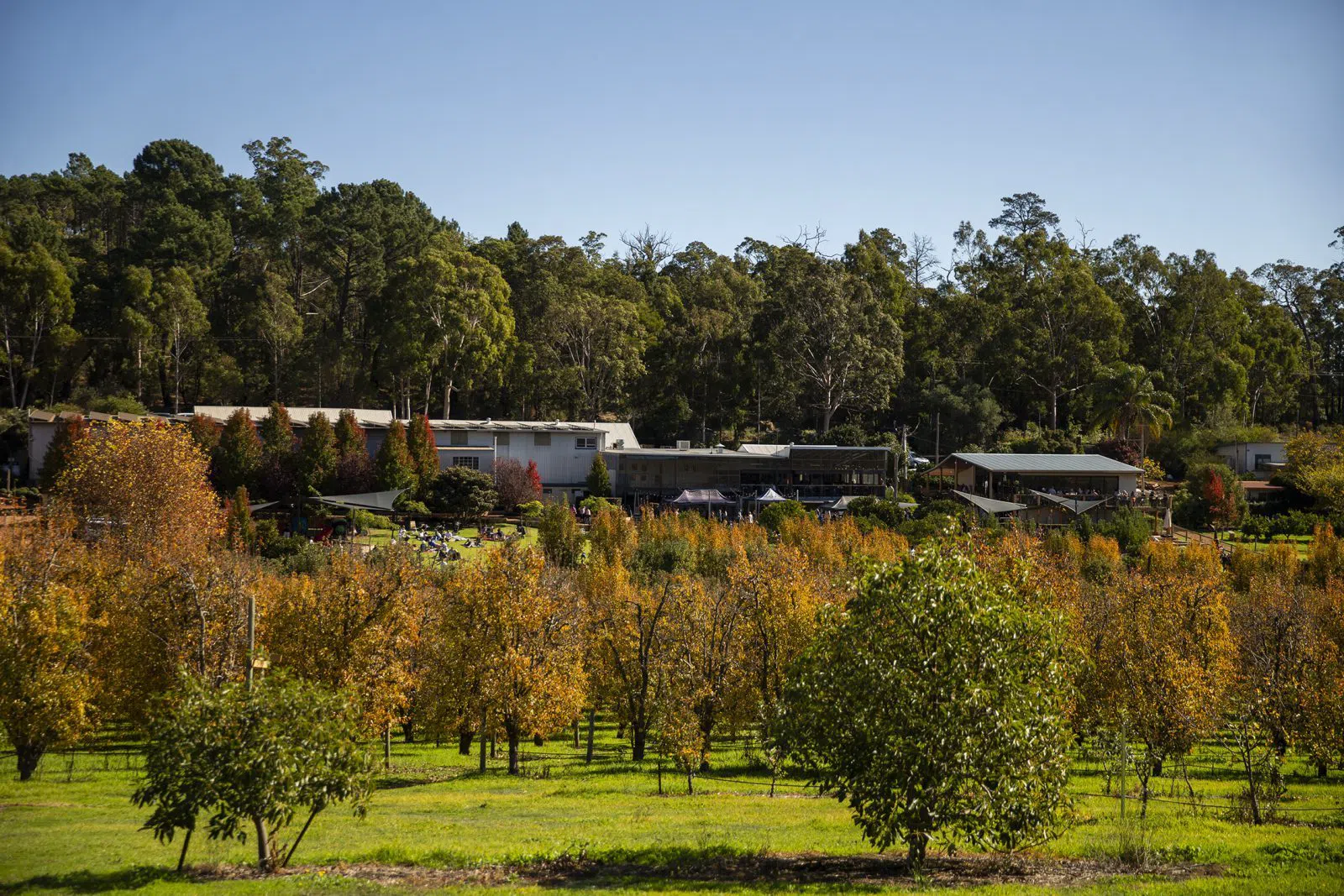
Noble Falls Tavern sits directly opposite the Noble Falls car park, which makes the walk-then-pub transition about thirty seconds long. That is the most useful thing about it, and the reason it beats a better-known pub further down the hill. It opens daily 11am to 10pm and later on Friday and Saturday, has a sports bar with TAB and a beer garden, is pet friendly and relaxed about groups, and charges honest country-pub prices.

Planning the day
You need a car. There is no practical way to link these trailheads on public transport, and the two fee parks charge $17 per vehicle rather than per person, so filling seats halves or quarters what each of you pays. Everything else on this list is free to enter.
Costs stay low: a full day of walking is nothing beyond fuel, and even a version with one park entry, a museum ticket and a pub lunch lands in modest territory for two people. Card is accepted everywhere you will want to eat, but carry a little cash for the Pump Station museum and any honesty-box moment.
Timing matters more than anything else. Aim for the first clear morning after a heavy few days, start early (Serpentine's gates open at 8:30am and its car park fills fast on a fine weekend), and pair one climb with one flat walk rather than stacking two ascents. Boots with grip, a rain layer, and no expectations of swimming anywhere.
For a base, the hills themselves have only the rooms at Mundaring Weir Hotel, so most visitors stay in the city and drive up; compare rates through Perth hotel search and pick something on the eastern side to shorten the morning run. The rest of the city, where to eat and what else is worth a day, sits in the Perth guide.
Before you go
When do the Perth Hills waterfalls actually run?
They are rain-fed and seasonal, so they only run after solid winter rain. Go 24 to 48 hours after a heavy few days: Lesmurdie Falls, Sixty Foot Falls and Bells Rapids all need that downpour, while Whistlepipe Gully keeps water moving through winter more generally. Outside a wet spell you will find damp rock rather than falling water.
Can you swim at Serpentine Falls?
No. Serpentine Falls has been closed to swimmers since 2025, after Naegleria fowleri was detected in the pool, and that closure still holds. The falls and the walk trails are worth the trip anyway, but anyone arriving to swim will be disappointed. Gates open 8:30am to 5pm and entry is $17 per vehicle.
Which waterfall walk is easiest for a mixed group or older visitors?
Noble Falls, off Toodyay Road: you can see the falls from the car park without walking at all, and the loop is a gentle grade 2 circuit of 3.6km with barbecues, toilets and a playground on site. John Forrest National Park is the other easy pick, with Hovea Falls and National Park Falls about 2km apart along the flat Railway Reserves Heritage Trail. Skip Sixty Foot Falls and Rocky Pool, which both involve steep, loose ground.
Do you have to pay to visit the Perth Hills waterfalls?
Most are free, including Lesmurdie Falls, Sixty Foot Falls, Whistlepipe Gully, Rocky Pool, Noble Falls, Bells Rapids and Lake Leschenaultia. The exceptions are John Forrest National Park and Serpentine National Park, both $17 per vehicle at the gate. That is per car rather than per head, so carpooling is the cheap way in. Araluen Botanic Park charges a small per-person entry.
What should you wear, and how slippery does it get?
Boots with real grip and a rain layer. Wet granite in the hills is genuinely slippery, the stepped sections at Lesmurdie Falls especially, and the loose rock on the 2.1km Sixty Foot Falls circuit is no place for smooth-soled trainers. Allow roughly double the time you would expect for any descent in the wet, and switch to the flat loops at Lake Leschenaultia or John Forrest if conditions are bad.