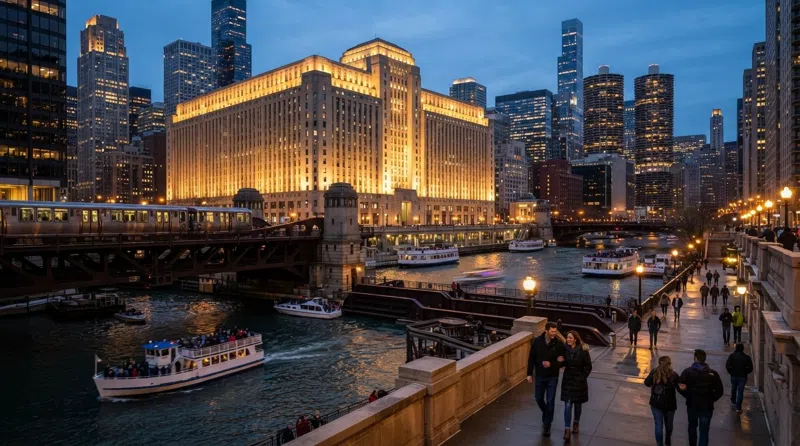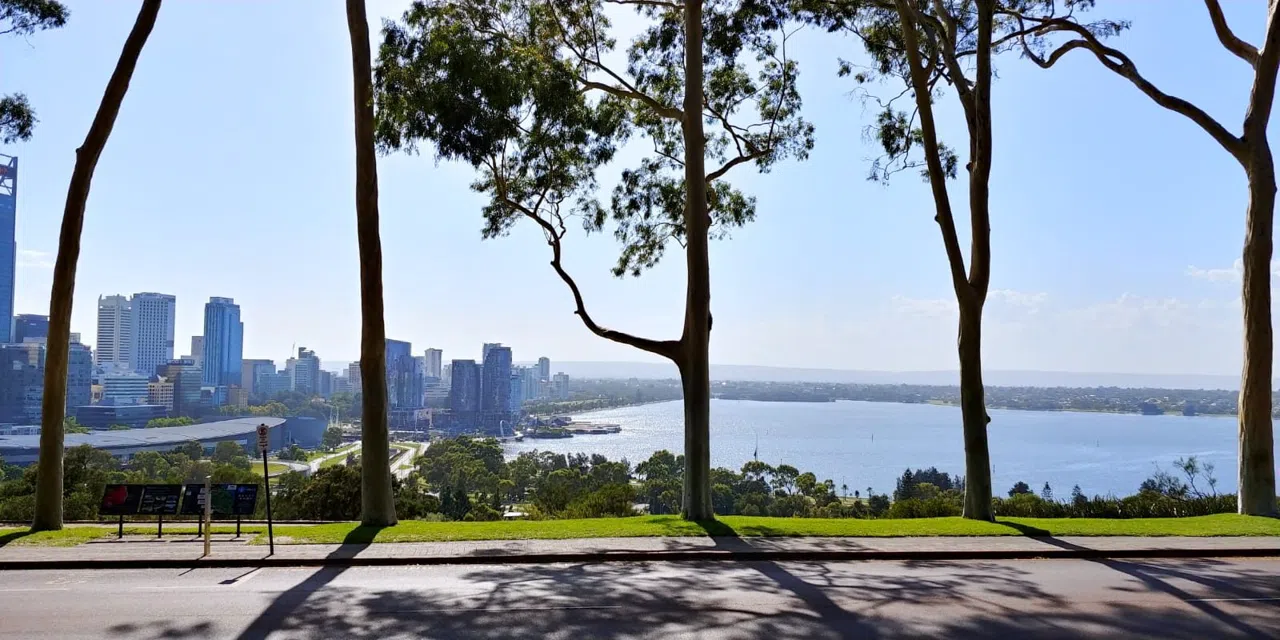

Kings Park is not a garden bolted onto a city — it is the hill the city grew around, 400 hectares of Marri woodland and cultivated garden sitting directly above the Swan River and the Perth CBD skyline. The park is a working piece of Whadjuk Noongar country as much as it is a tourist lookout, and the two identities sit next to each other without much fuss: a war memorial a few hundred metres from a wildflower meadow, a treetop walkway a short stroll from a Dreaming trail. This piece walks the park the way it actually rewards a visit — up, out, and down toward the river — with real hours, real prices, and honest notes on which stops are built for a coach group and which ones are better done alone at dawn.
Up Into the Canopy: The Park's Vertical Views
The park's best trick is height, and it delivers that height in three very different ways within a ten-minute walk of each other, all in the Fraser Avenue precinct near the main entrance.
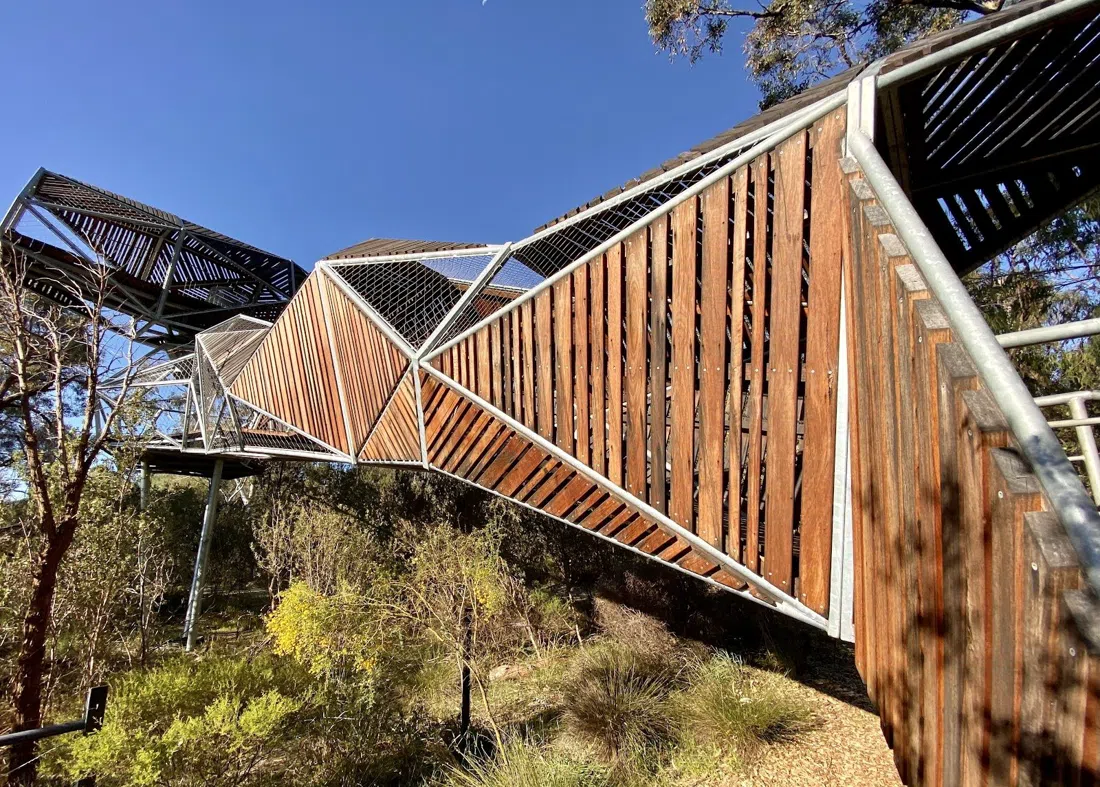
The Lotterywest Federation Walkway (Fraser Avenue precinct) is the signature move — a steel and glass bridge that lifts you to canopy height through Marri woodland, with the city skyline sitting behind the treetops. It's free, open access, no booking required, and wide enough that tour coaches and school groups move through constantly without bottlenecking — go early morning if you want the platform closer to yourself for photos. Budget 15–20 minutes to walk it properly and linger at the lookout end.
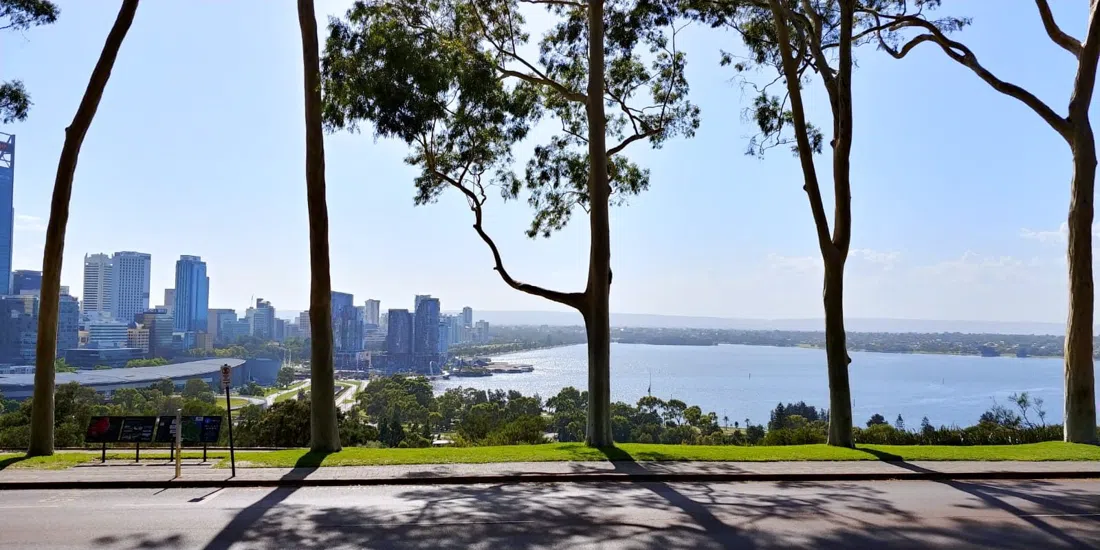
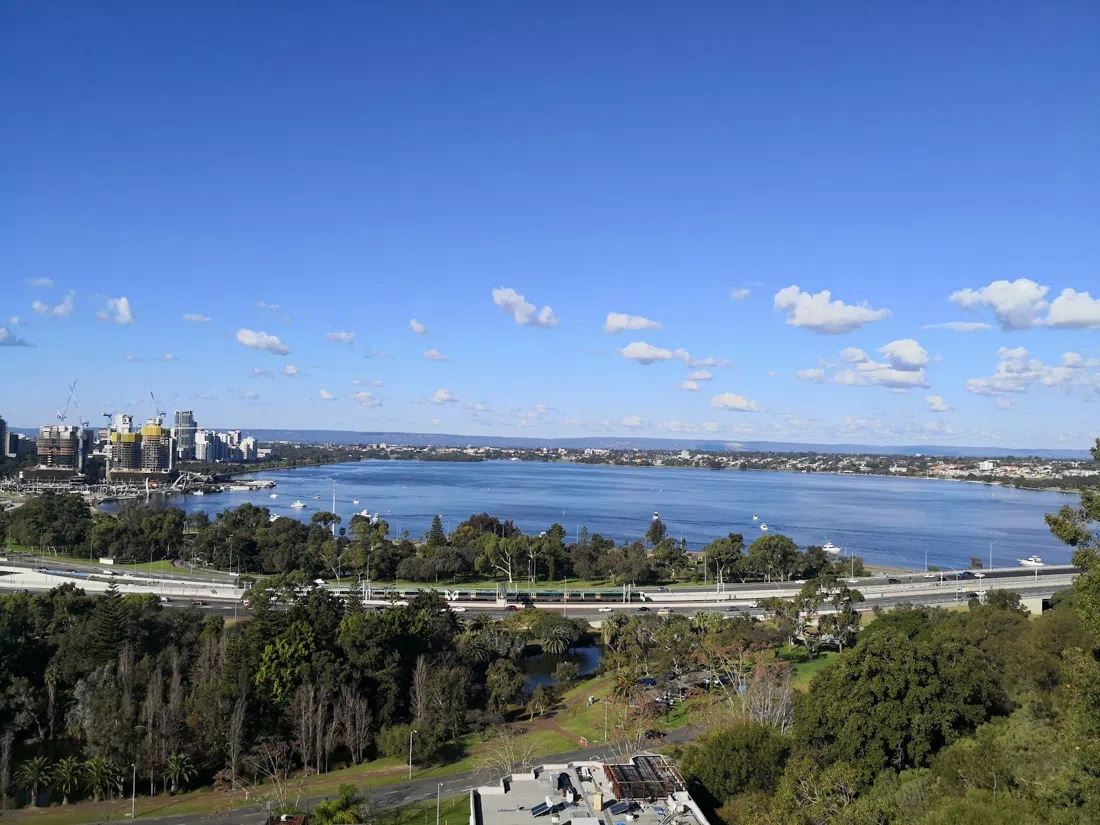
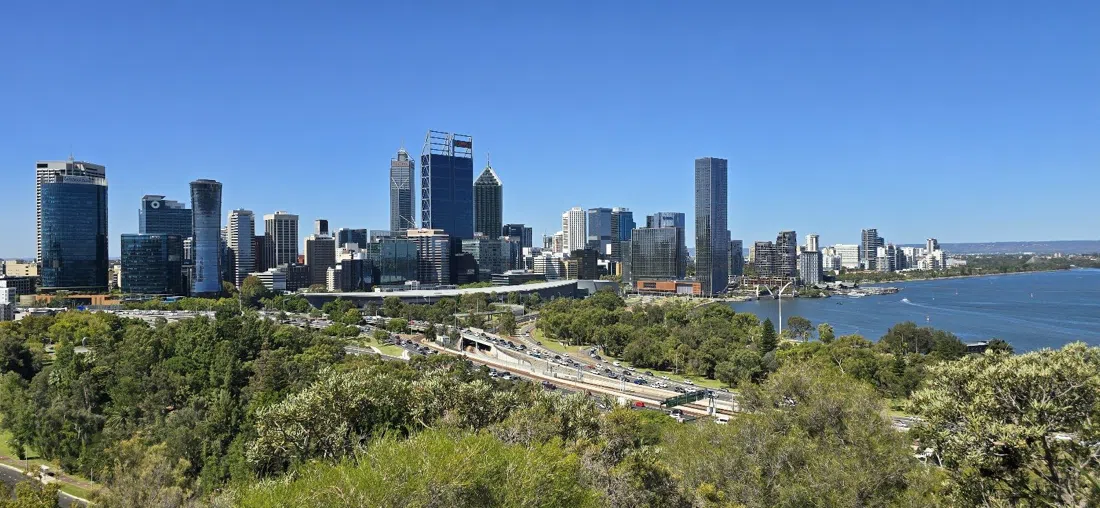
From there it's a five-minute walk to the Kaarta Gar-up Lookout, the open-air platform that produces the postcard shot everyone actually has of Perth: the CBD skyline framed by the river escarpment. It's free and handles any group size since it's an open platform rather than an enclosed structure, but the light is what makes or breaks it — golden hour turns the glass towers gold and softens the river; midday light flattens the whole scene. If you only have one photo stop in the park, make it this one, timed for late afternoon.
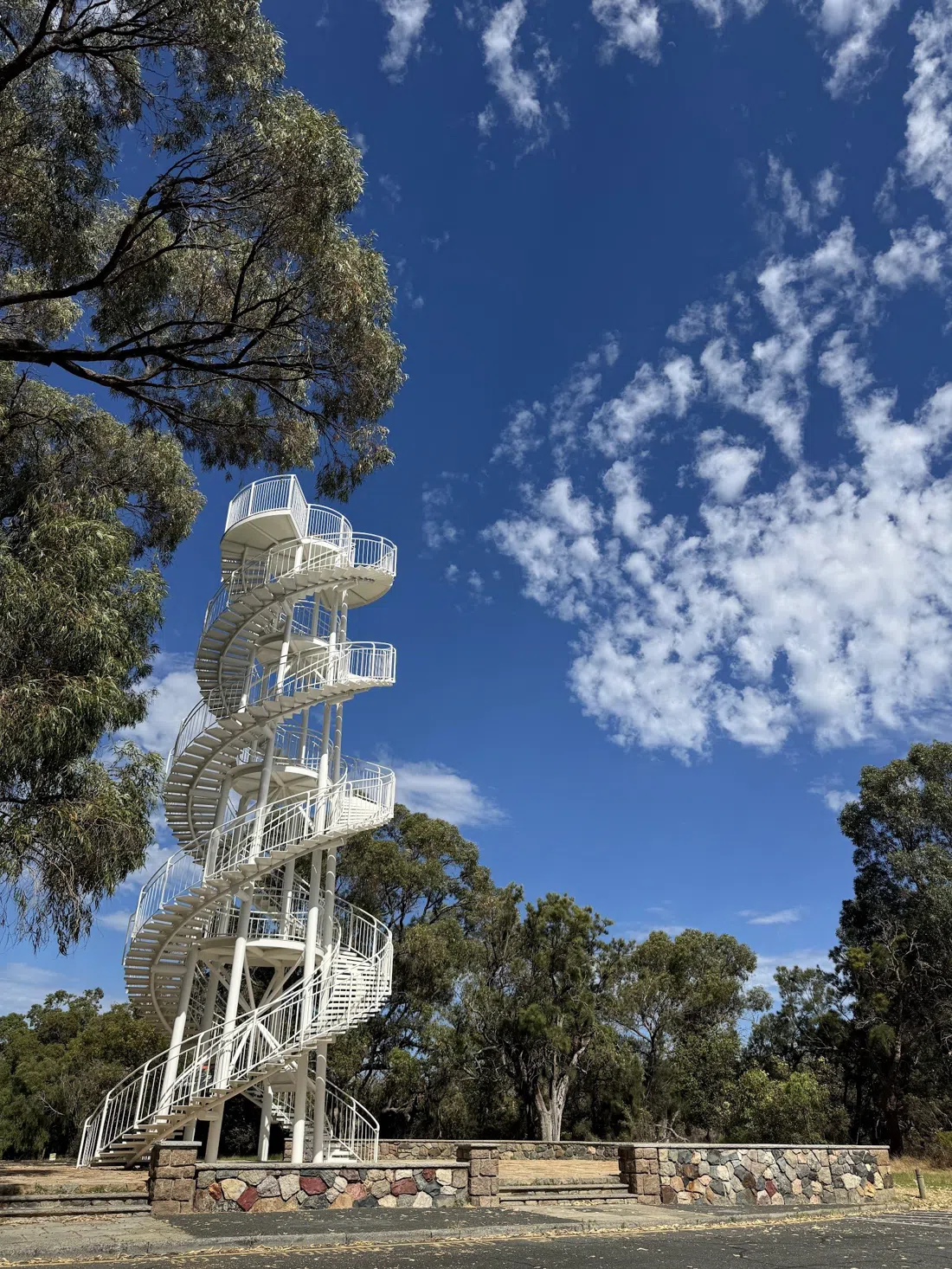
The third vertical option is the DNA Tower (also Fraser Avenue precinct), a quirky mid-century landmark built as a double-helix staircase — two separate spirals wind up the same structure so climbers going up never meet climbers coming down. It's free and self-climb, but the stairs are narrow and it is not wheelchair accessible, so large groups should stagger their entry a few minutes apart rather than bunching at the base. It's a novelty more than a major view (the platform is modest compared to the Federation Walkway), but worth the five-minute detour if you like architectural oddities.
Wild Green Heart: The Botanic Garden and Naturescape
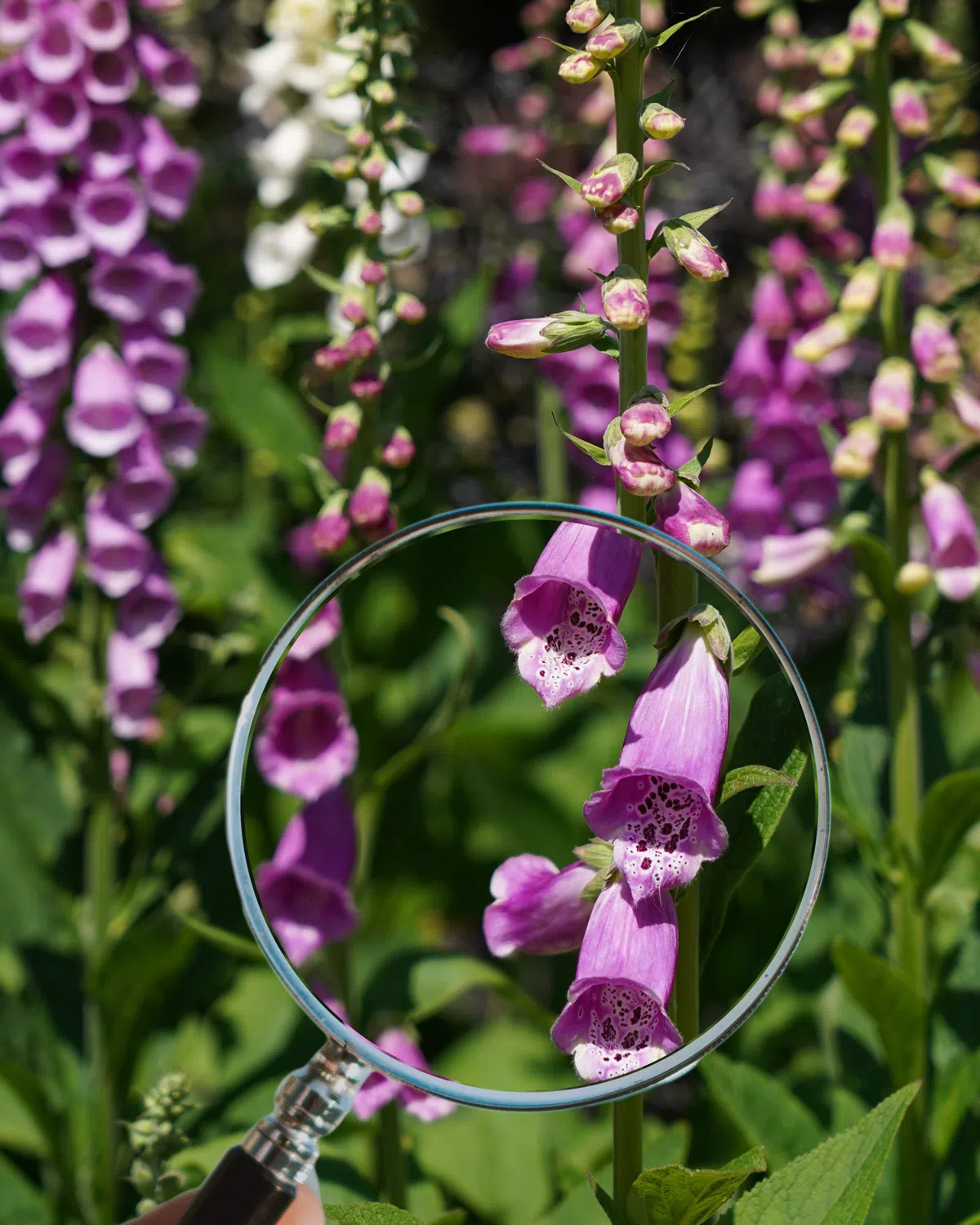
This is where Kings Park stops being a lookout circuit and becomes what it actually is — 17 hectares of curated Western Australian flora inside a much larger bushland reserve.
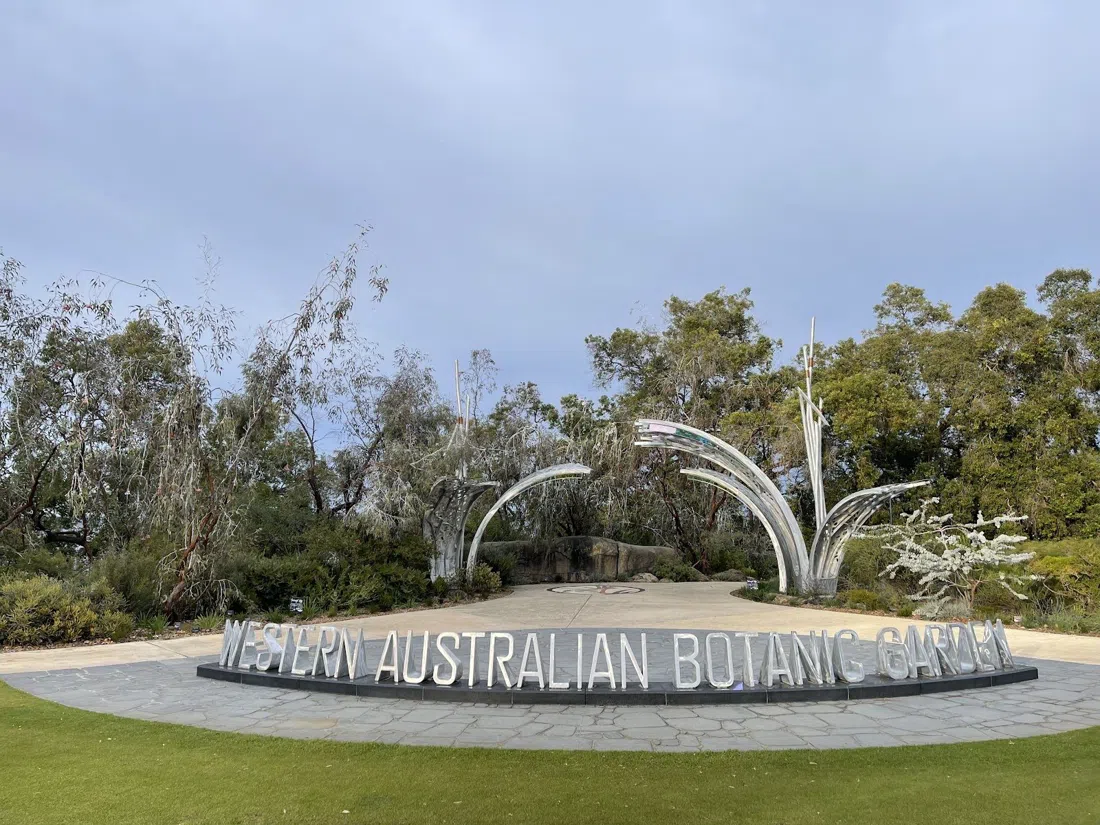
The Western Australian Botanic Garden sits at the heart of the park and is free, open access, with volunteer-led guided walks running daily that will take groups if you give them notice (ask at the Visitor Centre). This is genuinely the botanical reason to come to Kings Park rather than just the view — over 3,000 plant species native to WA, laid out so you can see in an hour what would otherwise take a week of driving the state to find. Peak colour lands during the Kings Park Festival, which runs 18 September to 4 October 2026 this year and turns the garden into a proper wildflower spectacle, but it rewards a visit at any time of year — spring for flowers, summer for the shade canopy, autumn and winter for quiet, uncrowded paths.
For families, the better stop is the Rio Tinto Naturescape Kings Park, a bushland nature-play area rather than a manufactured playground — kids climb over logs, wade through a creek line, and build cubbies in genuine scrub rather than plastic equipment. It's free but capacity-controlled, which matters: large groups need to book ahead or risk being turned away when it's busy, and it's closed on Mondays and for the entire month of February, so check before you plan a visit around it. It sits close to Zamia Cafe, which makes the obvious pairing for a family morning.
Whadjuk Country: Aboriginal Heritage in the Park
Kings Park's Noongar name is Kaarta Koomba, and the park carries genuine Aboriginal heritage rather than a plaque acknowledging it in passing — this is Whadjuk Noongar country, and the two heritage experiences here are worth treating as a real part of the visit, not an add-on.
Go Cultural Aboriginal Tours & Experiences runs the Karrgatup (Kings Park) Tour, departing from the Aspects at Kings Park car park. Bookings are essential — this isn't a walk-up experience — and it takes groups up to 30, priced roughly AUD 60–80 per person (check the operator's site for current rates). Noongar guides walk you through Whadjuk Dreaming stories and history on the actual country they happened on, which is the difference between reading a plaque and hearing it told properly. This is the single most authentic Aboriginal-heritage experience in the park and the one booking worth making in advance of your trip.
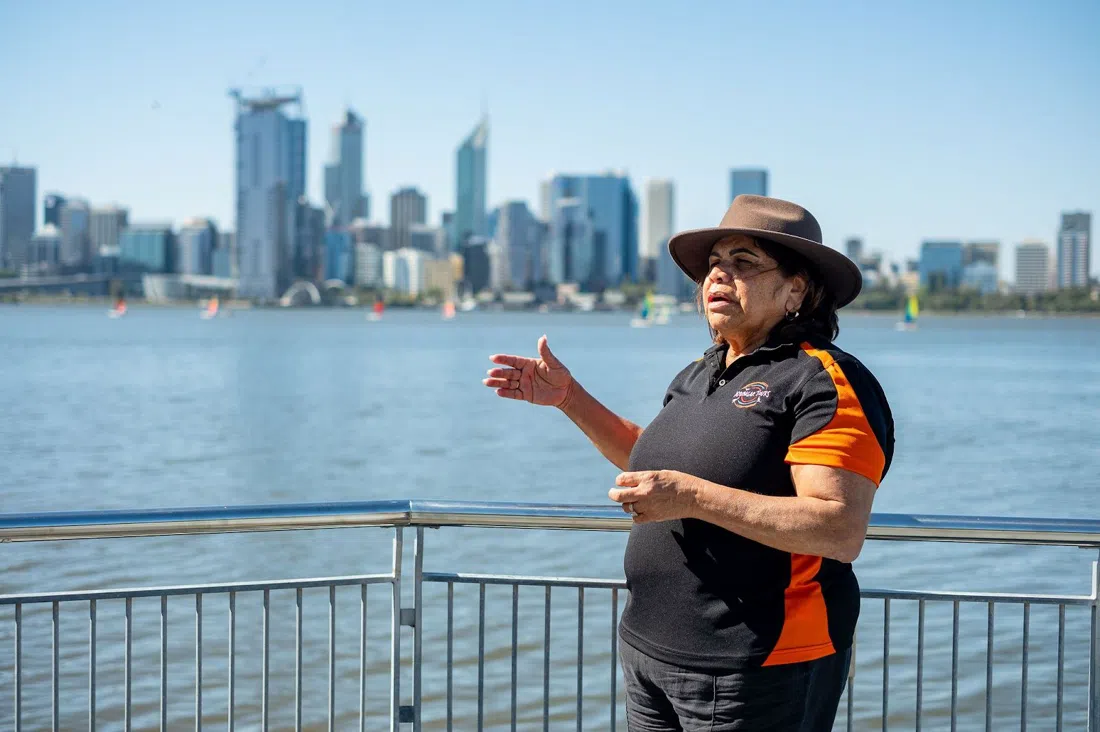
If you'd rather move at your own pace or the guided tour doesn't fit your schedule, the Boodja Gnarning Walk is a free, self-guided cultural trail through the park with no group-size limit and no booking needed. It's a quieter complement to the guided tour rather than a replacement for it — go in with the context from a guide first if you can, then use the self-guided trail to sit with specific spots longer.
Where the Land Meets the River: The State War Memorial
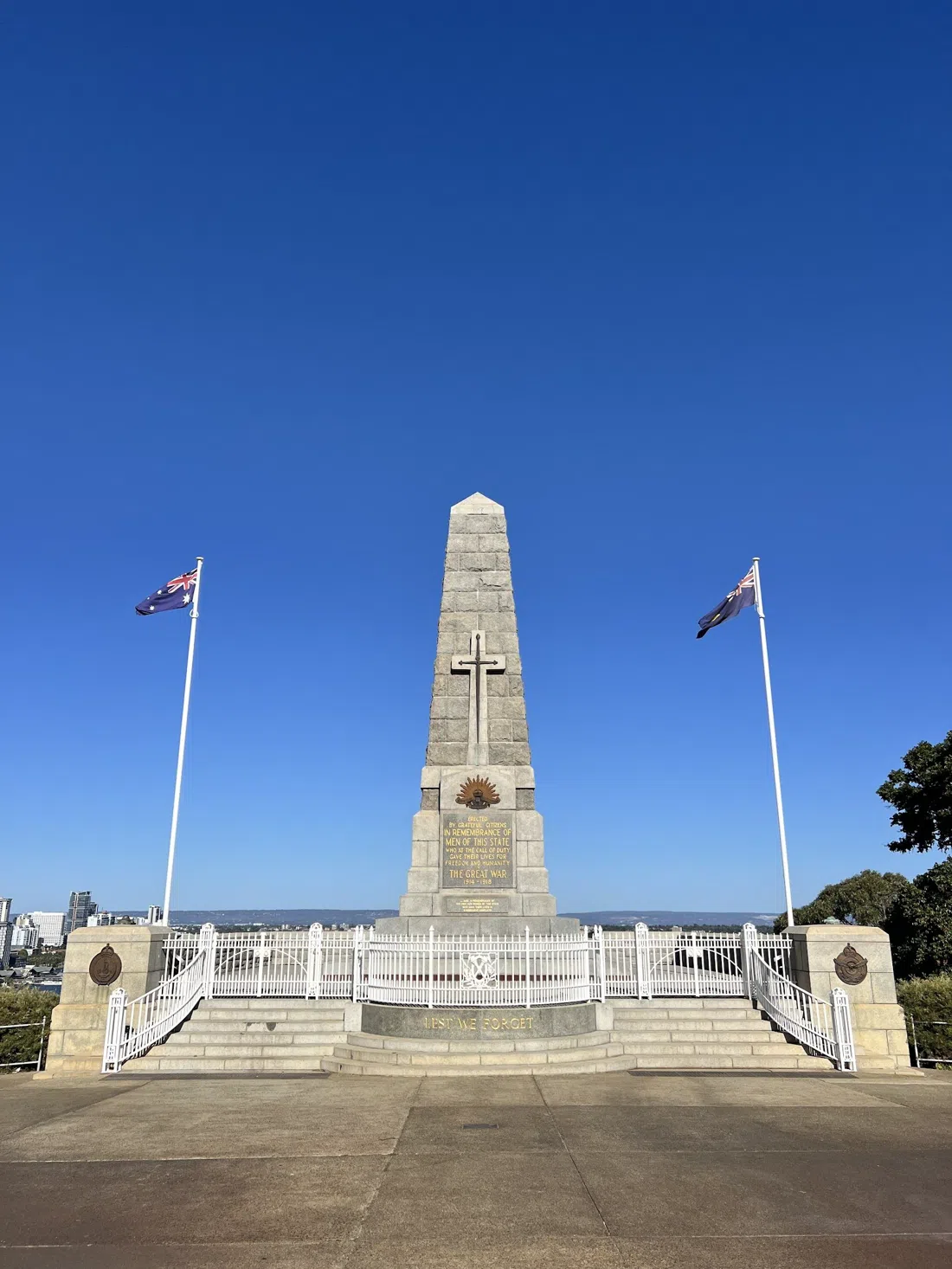
The State War Memorial sits at the point where Mount Eliza drops away to the river — a deliberate siting, not a coincidence, and it gives the memorial a gravity the rest of the park's manicured lawns don't have. It's a free, open-air precinct, and respectful group visits are welcome, particularly around dawn or dusk when the light and the quiet suit it. This is worth building into a route as the solemn counterpoint to the wildflowers and the treetop selfies — five or ten minutes of quiet before you head back into the busier parts of the park.
Guided Orientation: Free Walks for First-Timers
If you're visiting Kings Park for the first time and don't want to wander blind, the Kings Park Visitor Information Centre runs free volunteer-led guided walks daily, and drop-in groups are welcome with no booking required. The Visitor Centre itself is open 9:30am to 4pm every day except Christmas. This is the lowest-friction way to get real context on the park's plant life, history and layout rather than piecing it together from signage, and it's the sensible first stop for anyone arriving without a plan — ask what time the next walk departs when you arrive.
Refuel and Browse: Cafes, Dining and a Real Gift Shop
Kings Park spans enough ground that you'll want a food plan, and it splits cleanly by pace.
Zamia Cafe is the easy mid-walk refuel — walk-in, casual, and it handles family groups and tour parties without friction. It sits right by the dinosaur playground, which makes it the natural stop if you're doing the Naturescape or Synergy Parkland with kids in tow. Expect AUD 10–25 for coffee-and-something or a light lunch.
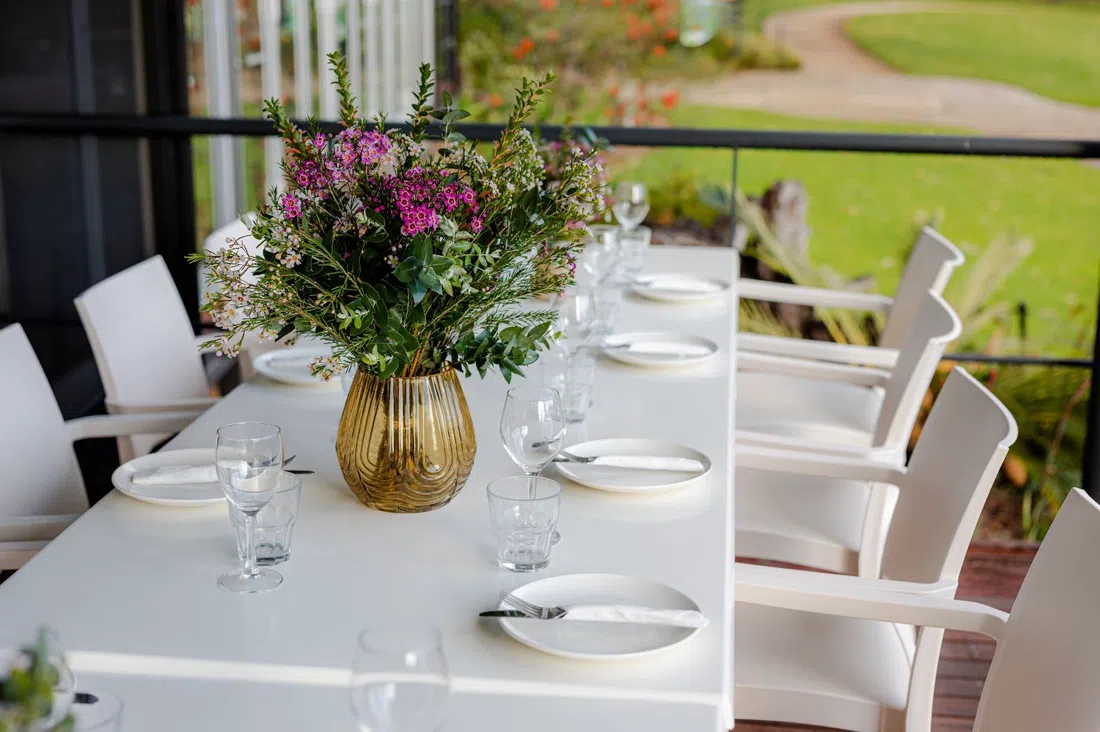
For something more considered, Fraser's Restaurant has been Perth's classic occasion restaurant since 1993, and the view from the terrace over the river and city is a genuine reason to book, not just a line in a brochure. Mains run roughly AUD 40–90 and up, function spaces and group bookings are available, and it's worth reserving a terrace table ahead rather than turning up and hoping — especially around sunset, when every table with a view is spoken for.
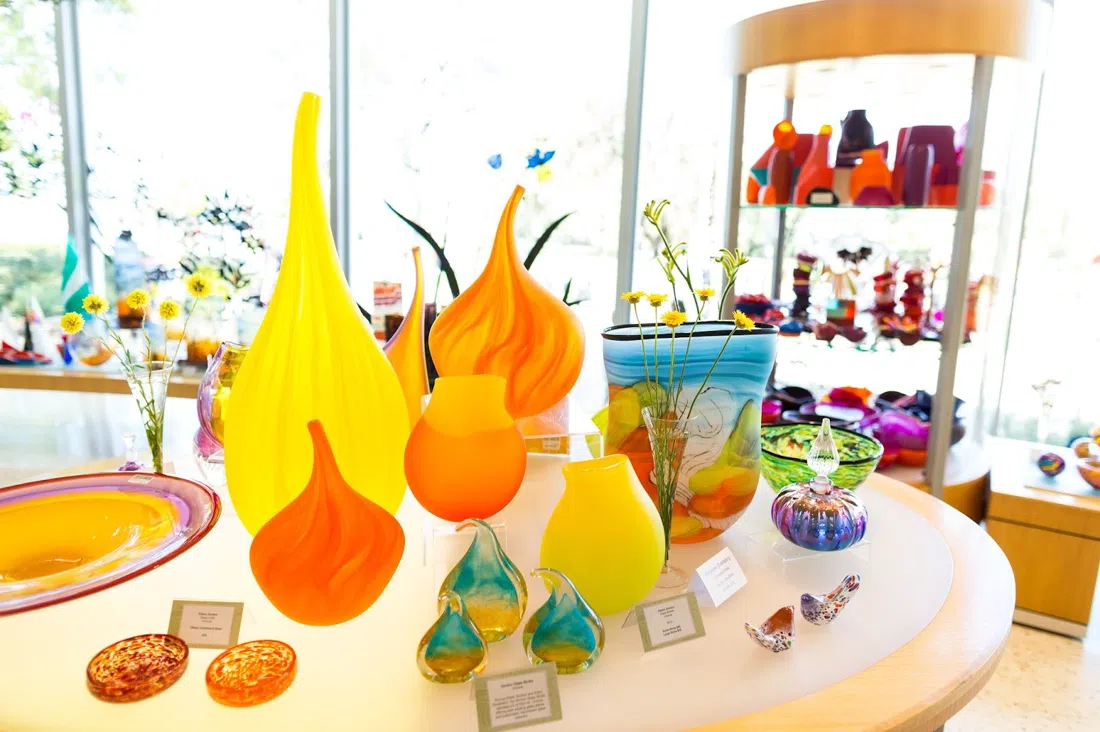
Between the two, the Aspects of Kings Park Gallery Shop is a genuinely locally-made souvenir stop rather than the mass-produced tat you'll find near most city viewpoints — think WA-made ceramics, art and design pieces from AUD 10 up into the hundreds, with gift-wrapping offered and easy browsing for tour groups. It also directly funds the park's upkeep, which is a better reason to buy something here than at the airport on the way out.
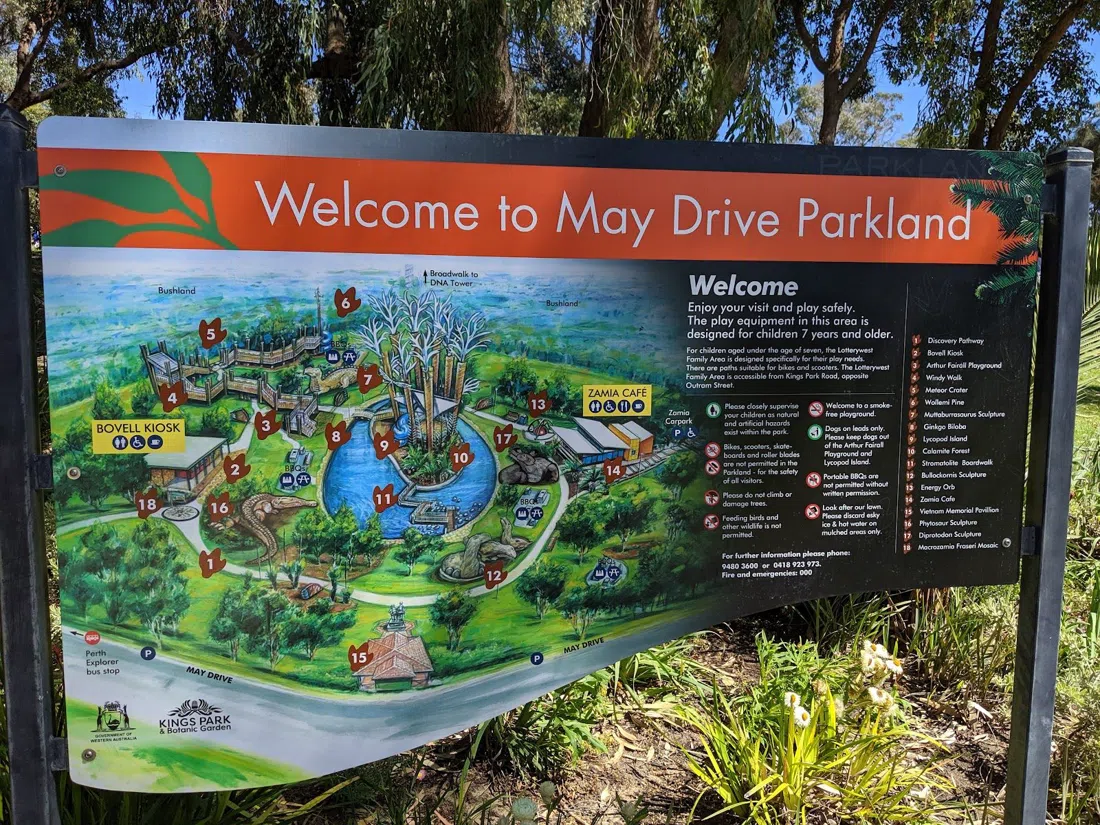
If you're travelling with children and need somewhere for them to simply run, Synergy Parkland is free, open access, and built for it — a loud, joyful counterpoint to the bushland calm found in most of the rest of the park, and worth flagging specifically for family travellers who need a release valve between quieter stops.
Practical Notes: Getting There, Timing, Budget
Getting there. Kings Park sits directly above the CBD, about a 15–20 minute walk uphill from the city centre via Malcolm Street, or a short drive/rideshare (5–10 minutes from most central hotels). Public buses (the free CAT bus network includes a stop near Fraser Avenue) run into the park regularly, and there's paid parking at Fraser Avenue if you're driving — it fills fast on weekends and during the Kings Park Festival, so arrive early or plan to walk in.
Timing. The park itself never closes, but individual attractions run their own hours — the Botanic Garden and lookouts are open-access daylight-to-dusk, the Visitor Centre runs 9:30am–4pm daily except Christmas, and the Naturescape is closed Mondays and all of February. Budget half a day for the treetop-to-lookout circuit alone, or a full day if you're adding the Botanic Garden, a cultural tour and lunch. Golden hour (roughly an hour before sunset) is the best light for Kaarta Gar-up Lookout specifically.
Cash and budget. Almost everything described here is free — the walkways, lookouts, memorial, Botanic Garden and self-guided cultural trail cost nothing. The only real spends are the guided Aboriginal cultural tour (AUD 60–80pp, book ahead), a meal at Fraser's if you want the splurge, and whatever you pick up at the gallery shop. A reasonable day covering the main circuit plus lunch at Zamia Cafe runs comfortably under AUD 50 per person; add the cultural tour and Fraser's dinner and you're looking closer to AUD 150–200pp for the full experience.
Where to stay. Kings Park is walkable or a short ride from most central Perth accommodation, which makes it easy to build into either a morning or a golden-hour evening slot depending on your schedule — see Perth hotel search for options close to the park and the CBD. For more on planning the rest of your visit, the full Perth guide covers the city beyond the park.