The Perth issue
Perth Wildflower Walks and the Spring Day Trips Around Them
The Perth wildflower season is short and mostly close to town. Here is where it actually flowers, from a council park twenty minutes out to the sandplain two hours north.

By Femke de VriesPerth on foot, ferry and bike
The wildflower season here is short, and most of it happens within an hour of the city. From late August the heath along the Darling Scarp opens up, native orchids push through the grass in a council park twenty minutes from the centre, and Kings Park carries more than 3,000 Western Australian plant species within sight of the office towers. What follows is that season arranged by driving distance, starting with the walks you can finish before lunch.
Three walks you can finish before lunch
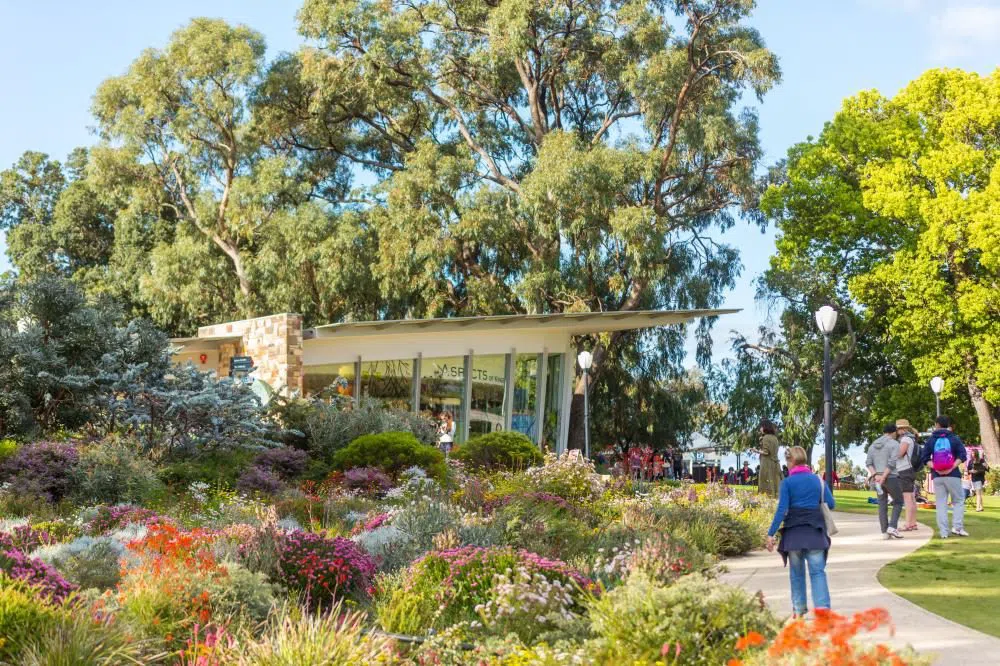
Kings Park and Botanic Garden (West Perth) is ten minutes from the city centre, free, unticketed, and open to anyone who walks in. Start with the volunteer-guided walk that leaves Fraser Avenue at 10am and again at 1pm, daily, at no charge. It is the most useful hour of a spring trip in this city. Someone who can put a name to a feather flower or a kangaroo paw in front of you saves two days of squinting at things you cannot identify later. The Western Australian Botanic Garden is what makes the walk work: over 3,000 WA species arranged in one place, so you see in an hour what is otherwise scattered across a thousand kilometres of the state. Groups of ten or more should book a tailored walk by request for a small charge rather than joining the daily one, which can be crowded. Couples and solo walkers are better off just turning up. The Everlasting Kings Park Festival runs 18 September to 4 October 2026, with displays, walks and talks. On those weekends the Fraser Avenue car parks are full by mid-morning, so aim to be there before 9.30am or walk up from the city.
Wireless Hill Park (Ardross) is the closest serious wildflower patch to the city centre and the one to take if you do not have a full day. Three trails run from 700m to 3km, the paved Wildflower Walk is wheelchair and pram accessible, and there are BBQs, picnic tables, toilets and parking, all free. Orchids are the draw from August to October, and they are low and small, so walk slowly and look at the ground rather than the view. This is a heritage council park with houses and traffic on three sides, not wilderness. The orchid ground is genuinely good and the setting is suburban. The museum takes booked groups if you want the radio-station history alongside the flowers.
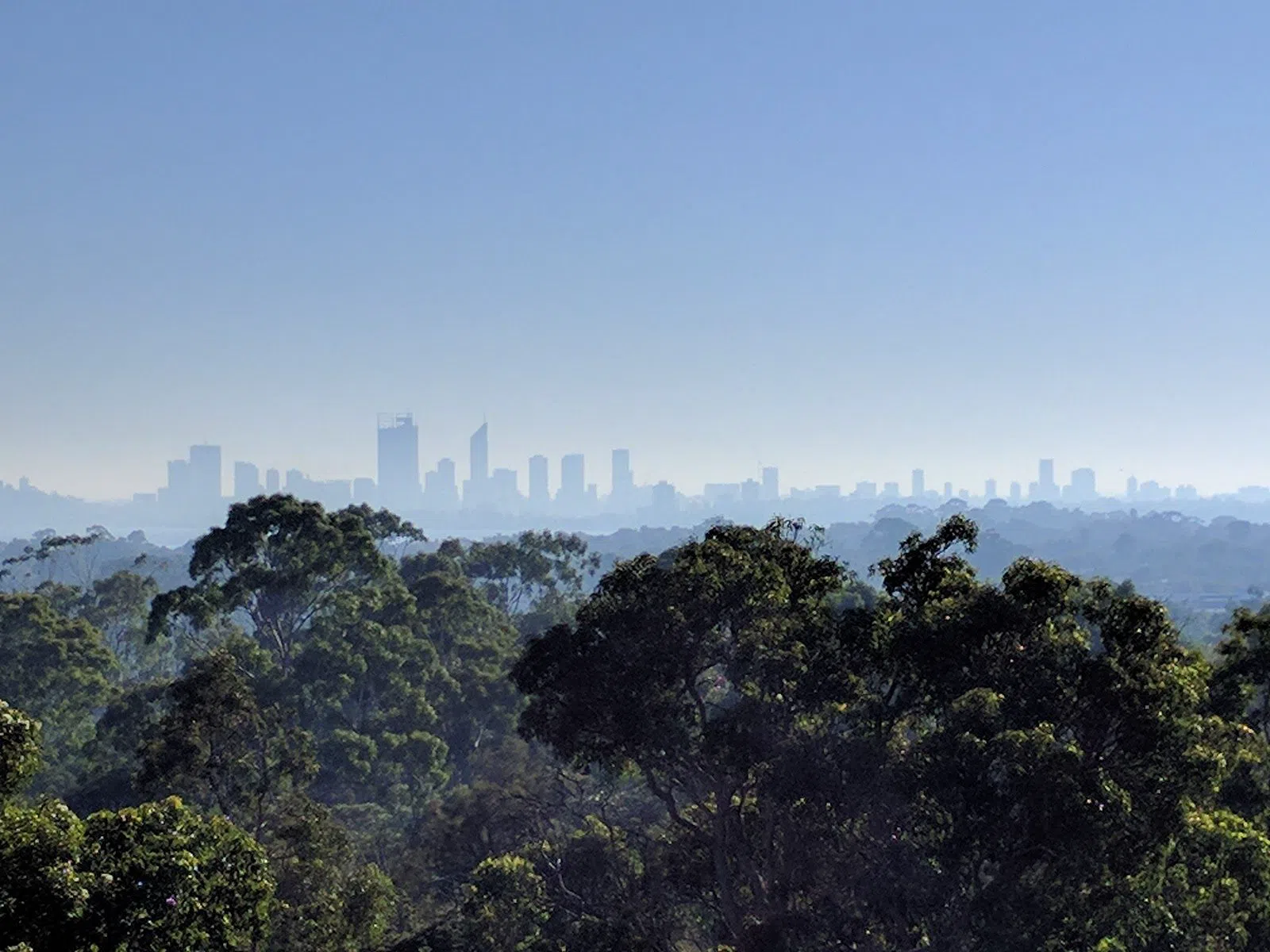
Bold Park (City Beach) gives you 437 hectares of remnant bushland ten minutes from the coast, with 15km of tracks and no entry fee. The Reabold Hill boardwalk is universal-access and takes about twenty minutes to the lookout. The Zamia Trail is the long circuit for anyone who wants to be out for a couple of hours. Come on a clear spring morning when the heath is flowering and the light is still low. The car park handles small group vehicles comfortably, and with no gate and no ticket, it is an easy one to slot in around a flight or a check-out time.
Plan your Perth trip
Live prices from our booking partners.
Free cancellation on many rooms. We may earn a commission when you book.
The hills hold the densest flowering
Ellis Brook Valley Reserve (Martin) is 35 minutes southeast of the city on Rushton Road, and it is the richest wildflower site in metropolitan Perth, with over 500 species in one small valley. Gates open 6am to 7pm, entry is free, and the reserve is unstaffed, which means exactly what it sounds like: no water, no bins, no one to ask. Carry two litres a head and take your rubbish out with you. It takes a minibus without trouble and no bookings are taken, so a small group can simply arrive. If you only do one bushland walk in spring, do this one.
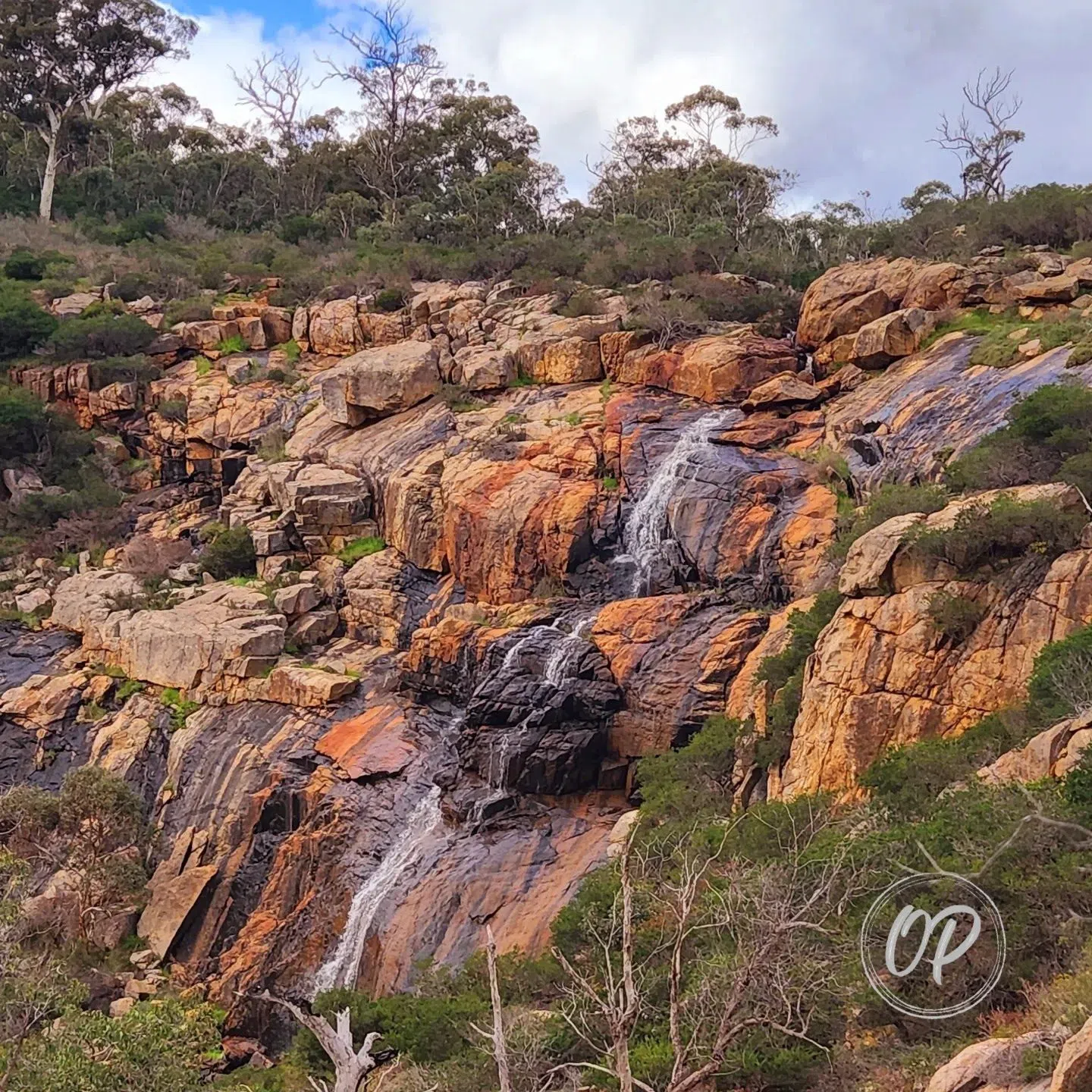
Kaarakin Black Cockatoo Conservation Centre (Martin) is twenty minutes from Ellis Brook and pairs with it neatly for an afternoon. The 75-minute guided walk among rescued black cockatoos costs about A$15 adult, A$7 child, A$40 family, and booking is essential, so do not plan to turn up on spec. There are scheduled public tours, private group bookings, and a longer 'Bird Bonanza' bushwalk version if you want more time in the bush; the commercial tour options cost more. The money funds the rehabilitation work, and the birds are close enough to hear properly.
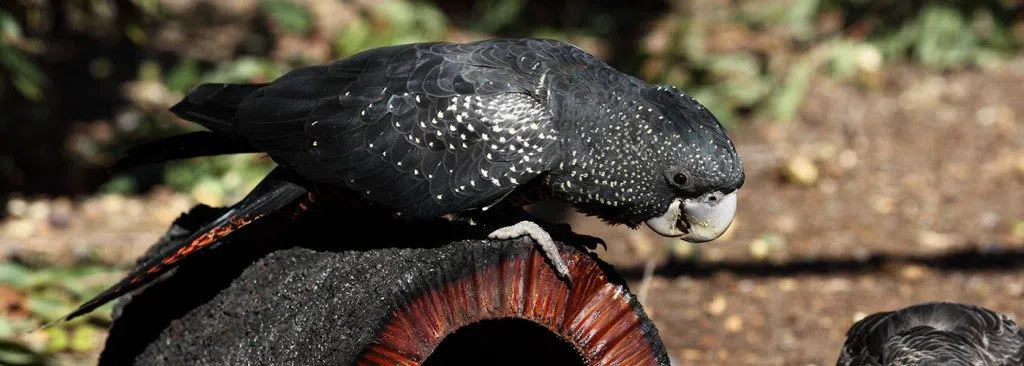
Lesmurdie Falls (Lesmurdie, in Mundy Regional Park) only really runs in late winter and spring, which is precisely when the heath around it flowers. Entry is free and there is a picnic area at the top car park. The 1.5km Lesmurdie Brook Loop is the version to take with children or mixed fitness. The 2km lookout return gives the best view across the coastal plain. The Foot of the Falls descent is steep and loose in places, and not for everyone in the group, so send the people who want it down and let the rest wait at the top rather than committing everybody.
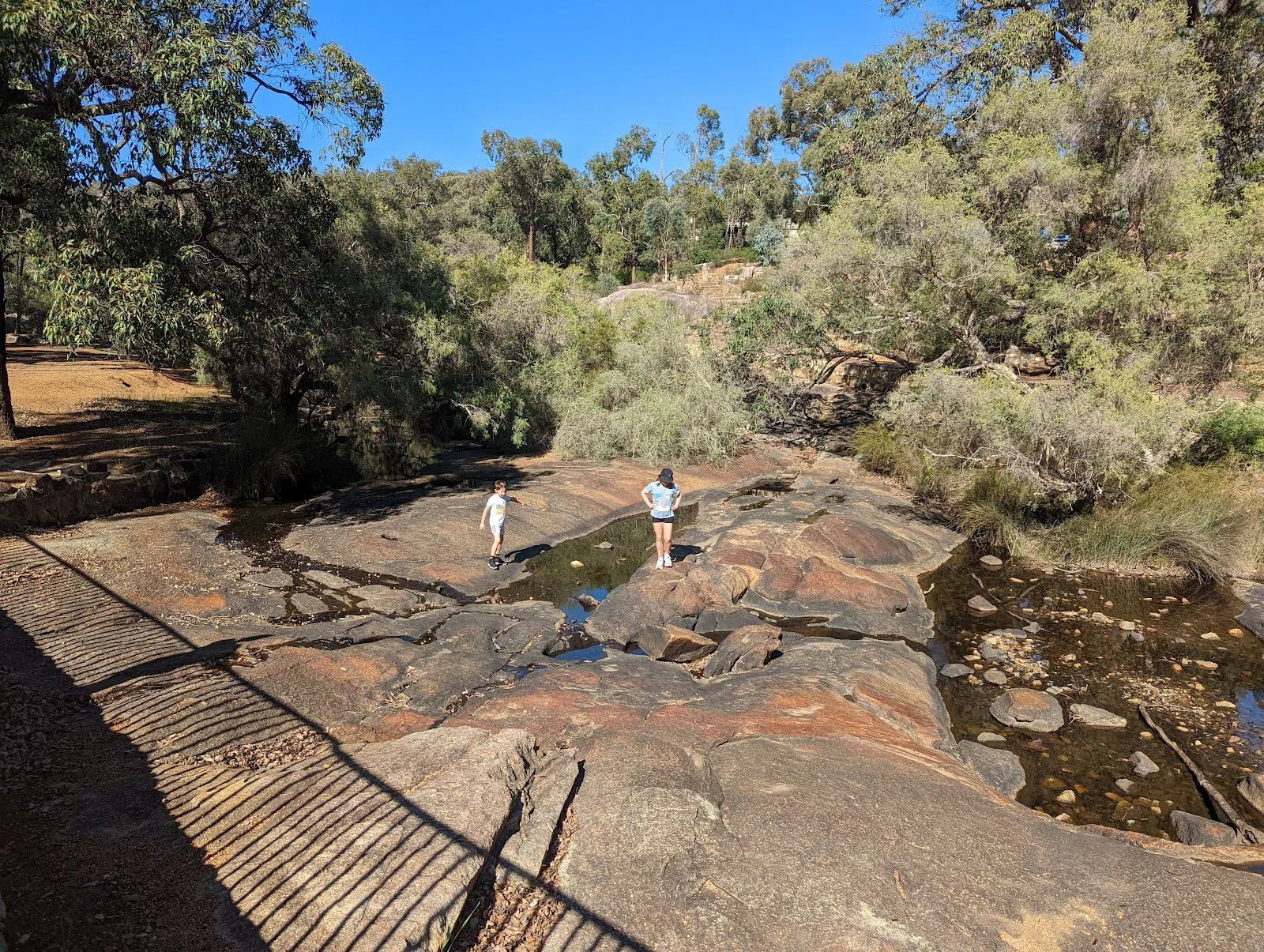
John Forrest National Park (Hovea) charges A$17 per vehicle and holds the 4.6km Wildflower Walk, which peaks from August through to November, a longer window than most sites here. Two practical warnings. The former tavern has closed, so there is no food or coffee in the park and you need to bring your own. And a staged upgrade is under way, with a new West Ridge plaza due in early 2027, so trail realignments are live. Check the current park notices before you drive up rather than discovering a closed section at the trailhead.
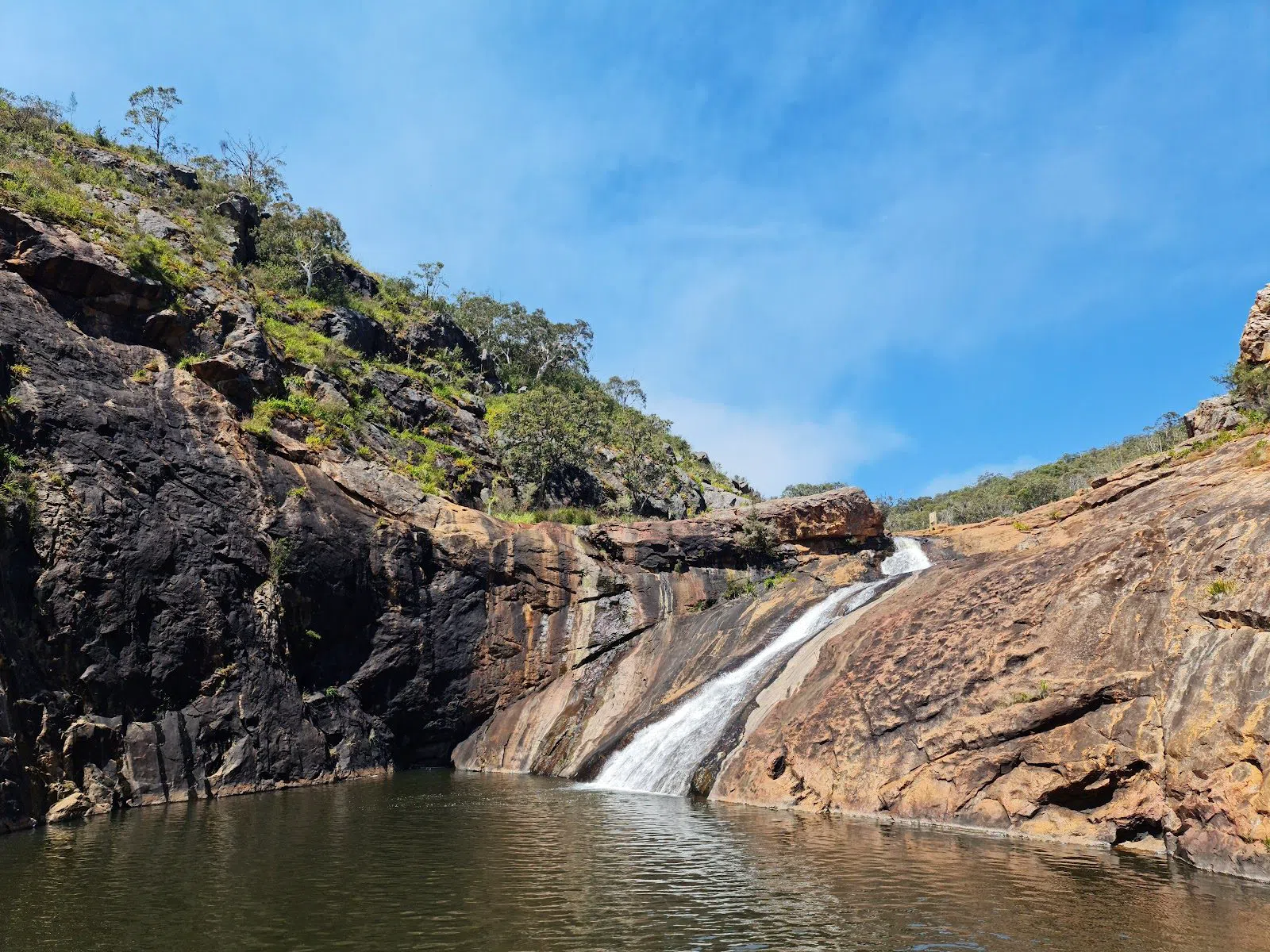
Serpentine National Park (Serpentine) is a 45-minute drive south, open 8:30am to 5pm daily, A$17 per vehicle, with BBQs and picnic areas. Gates close once the park reaches capacity, so groups should either arrive early or call ahead; on a warm spring Sunday that cutoff comes well before lunch. Swimming has been closed since bacterial detections and remains off-limits. As a walking and picnic stop under the scarp with the falls running and the wildflowers out, it is worth the drive. As a swimming day, it is not on, and no amount of hopeful reading of the signage changes that.
One garden where the colour is planted rather than found
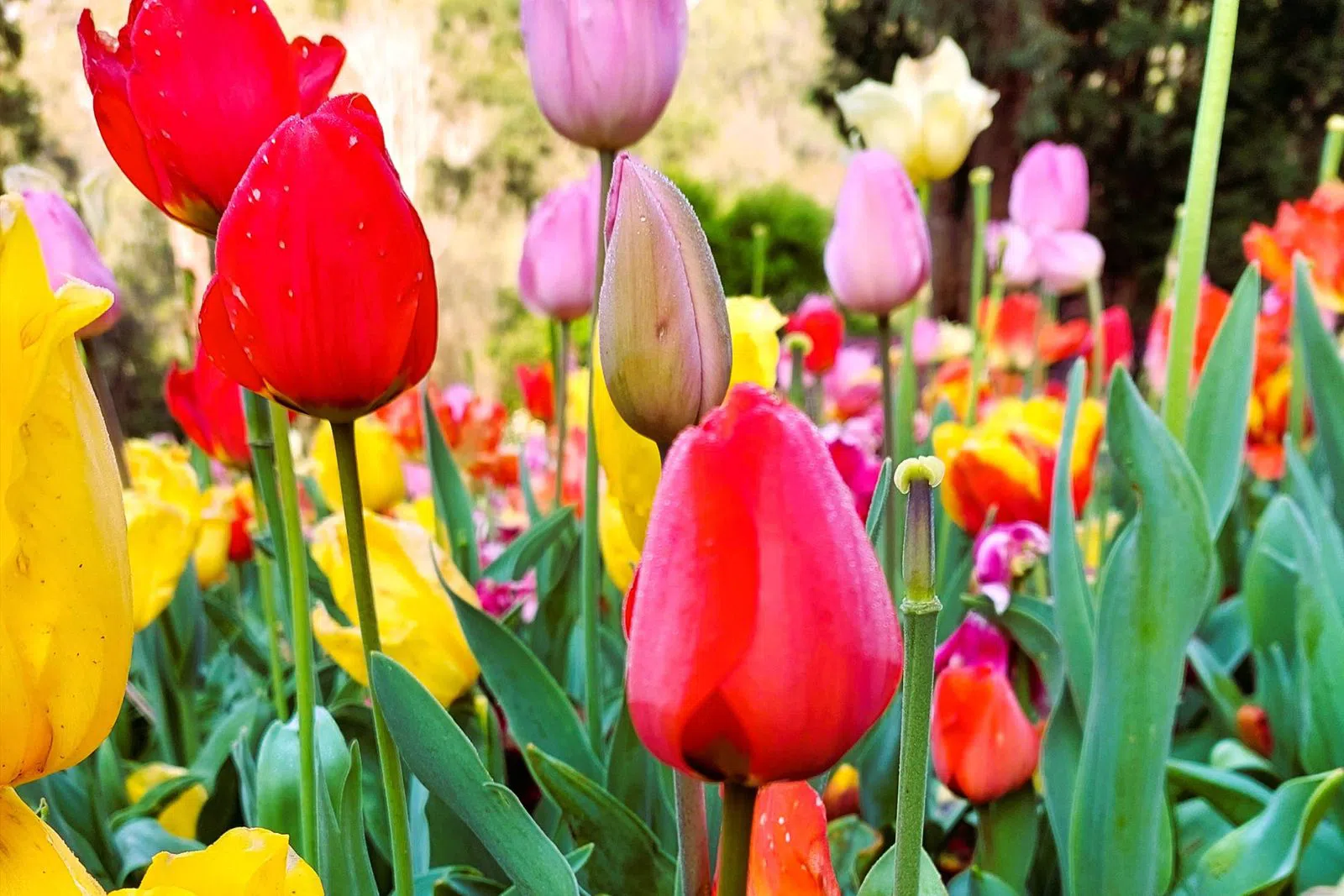
Araluen Botanic Park (Roleystone) is the one Perth garden where the spring display is cultivated. The Yates Springtime tulip festival opens 4 September 2026 and runs through the season, entry is A$10 to A$20, and the park is set up for day visitors, coaches and tour-group arrivals, with venue hire available. Call ahead on festival weekends. If you want Western Australian wildflowers specifically, Ellis Brook and Kings Park do that job and Araluen does not; the tulips are tulips. Where it earns its place is with a mixed group where not everybody wants a bush track, or as a deliberate contrast on the same day as a hills walk, so you can see what the wild version looks like next to the planted one.
North for koalas, a cave and kangaroo paws
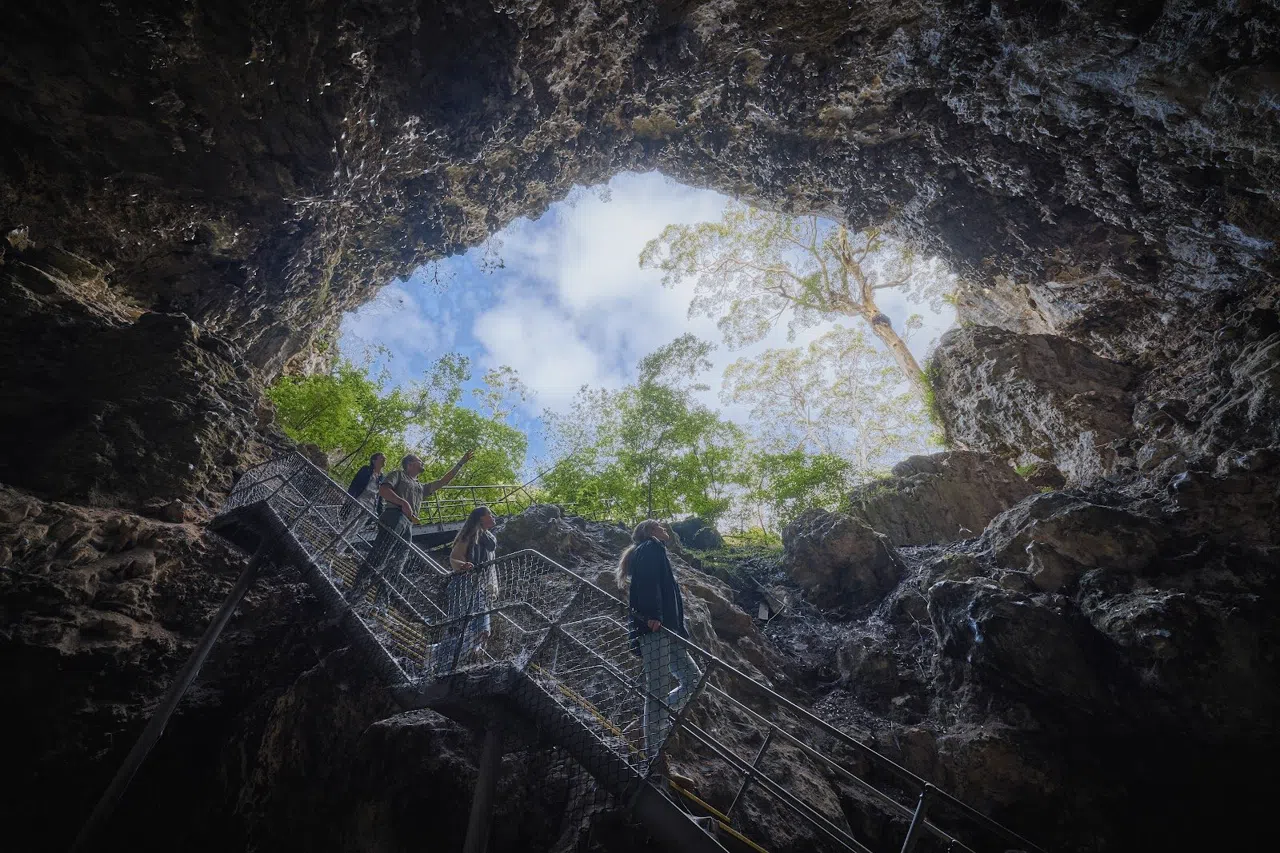
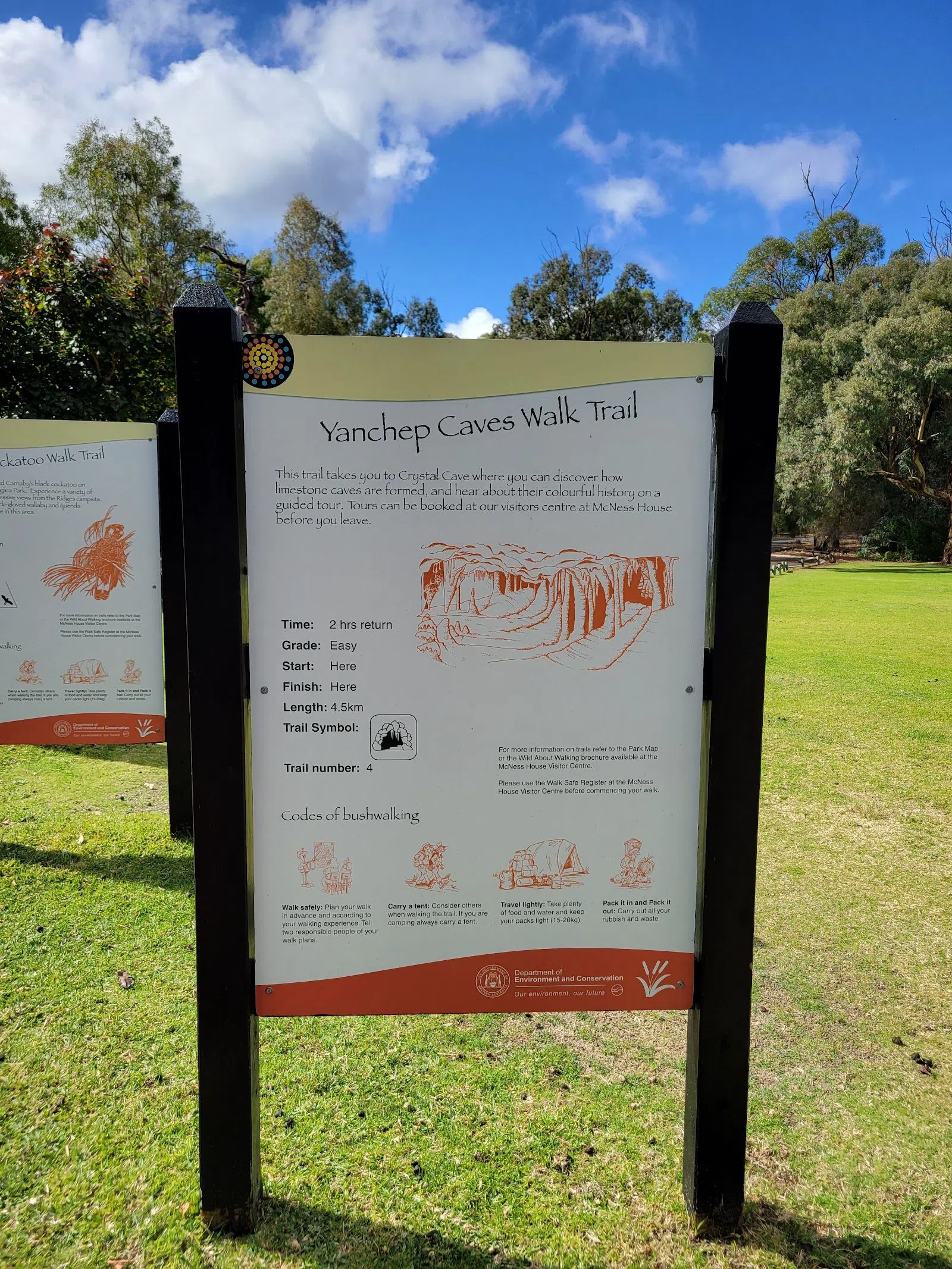
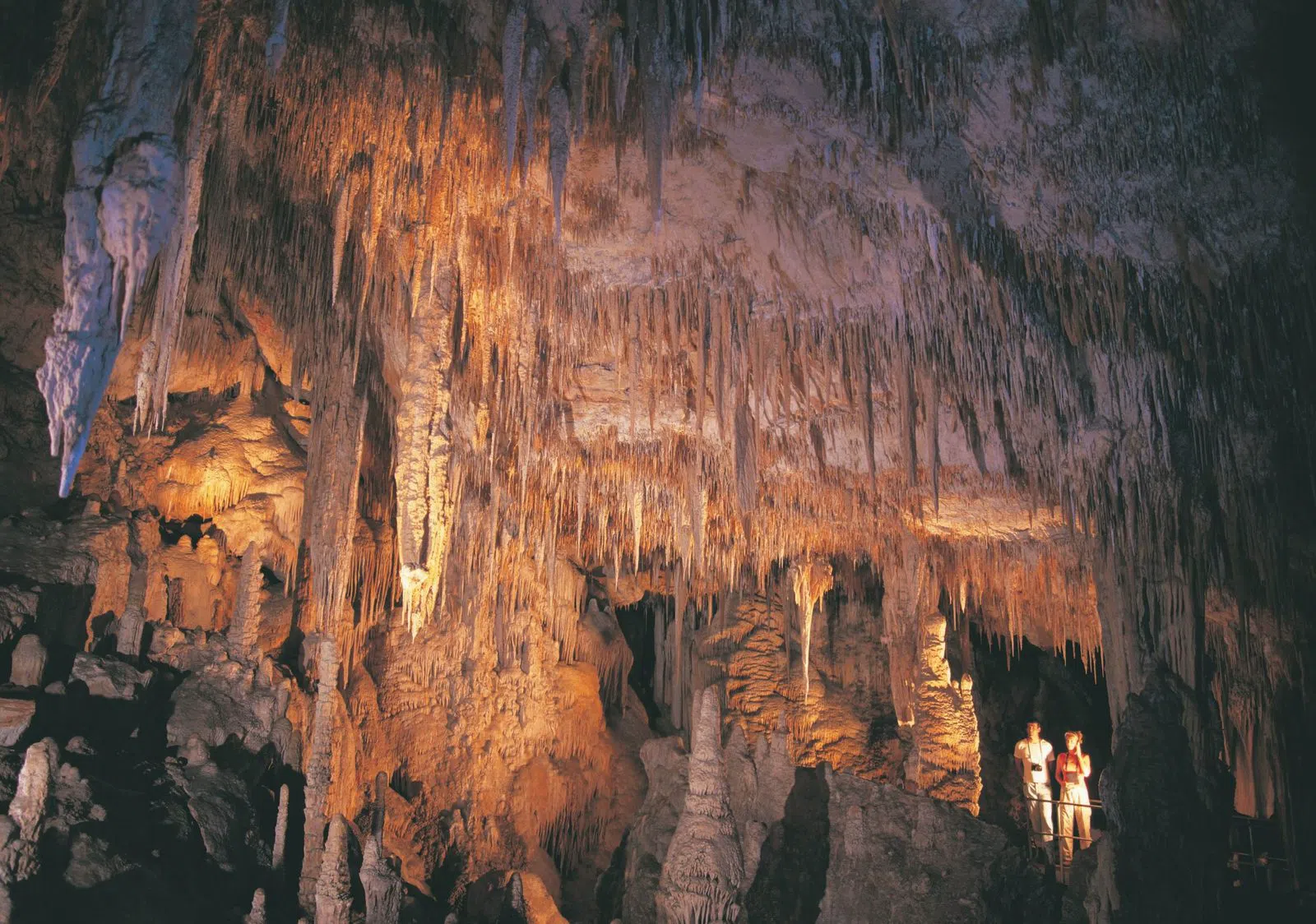
Yanchep National Park (Yanchep) sits 50 minutes north of the city, A$17 per vehicle, and is the most group-friendly park on this list. Guided Crystal Cave tours run seven days at set times for about A$15 adult and A$8 child, coach day tours call here regularly, and it is one of the few places in the state where you can see koalas and take a guided cave tour in the same stop. From August to October kangaroo paws, wattles and native orchids are scattered through the bush along the walk trails, which is the part most visitors skip in their hurry between the koala boardwalk and the cave. Build in an extra hour and walk.
A Swan Valley half-day with wildlife in it
Caversham Wildlife Park (Whiteman) is the reliable wildlife half of a spring day in the Swan Valley. Entry is about A$36 adult, kangaroo feeding is included, and the photo add-ons are optional, around A$35 for a koala and A$10 for a wombat. Skip them if you are not fussed; the animals are just as visible without. It is built for groups, with a dedicated tour-group desk ([email protected]), coach parking, and a permanent slot on Swan Valley day tours, which is also why it is busiest in the middle of the day. Go at opening. The park sits inside Whiteman Park, where roughly 400 native plant species flower from late winter, so pair the wildlife with a bushwalk on the surrounding tracks rather than treating the enclosures as the whole outing.

The long drives that earn a whole day
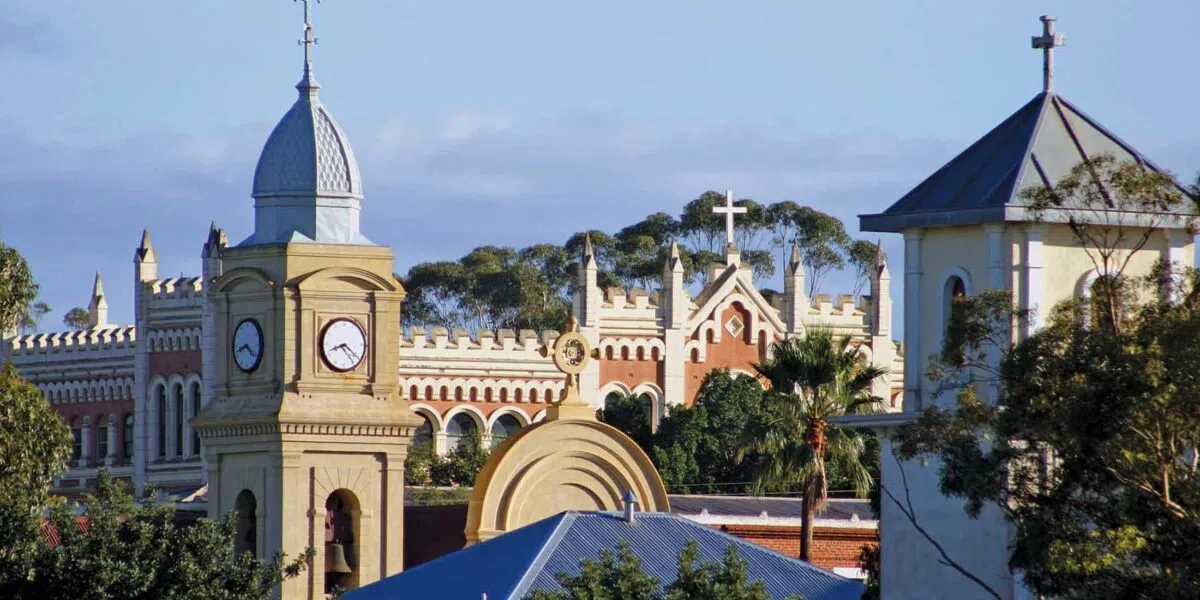
New Norcia, 90 minutes northeast, is Australia's only monastic town, and the drive is half the reason to go: in September the road runs through canola and roadside wildflowers most of the way. The museum and art gallery open daily 9.30am to 4.30pm, guided town tours leave at 11am and 1.30pm, and museum entry plus a tour comes to around A$20 to A$30. Group tours are bookable in advance and there is a monastery guesthouse if you would rather not drive back the same day. Take the guided tour rather than wandering, because the buildings mean very little without it.
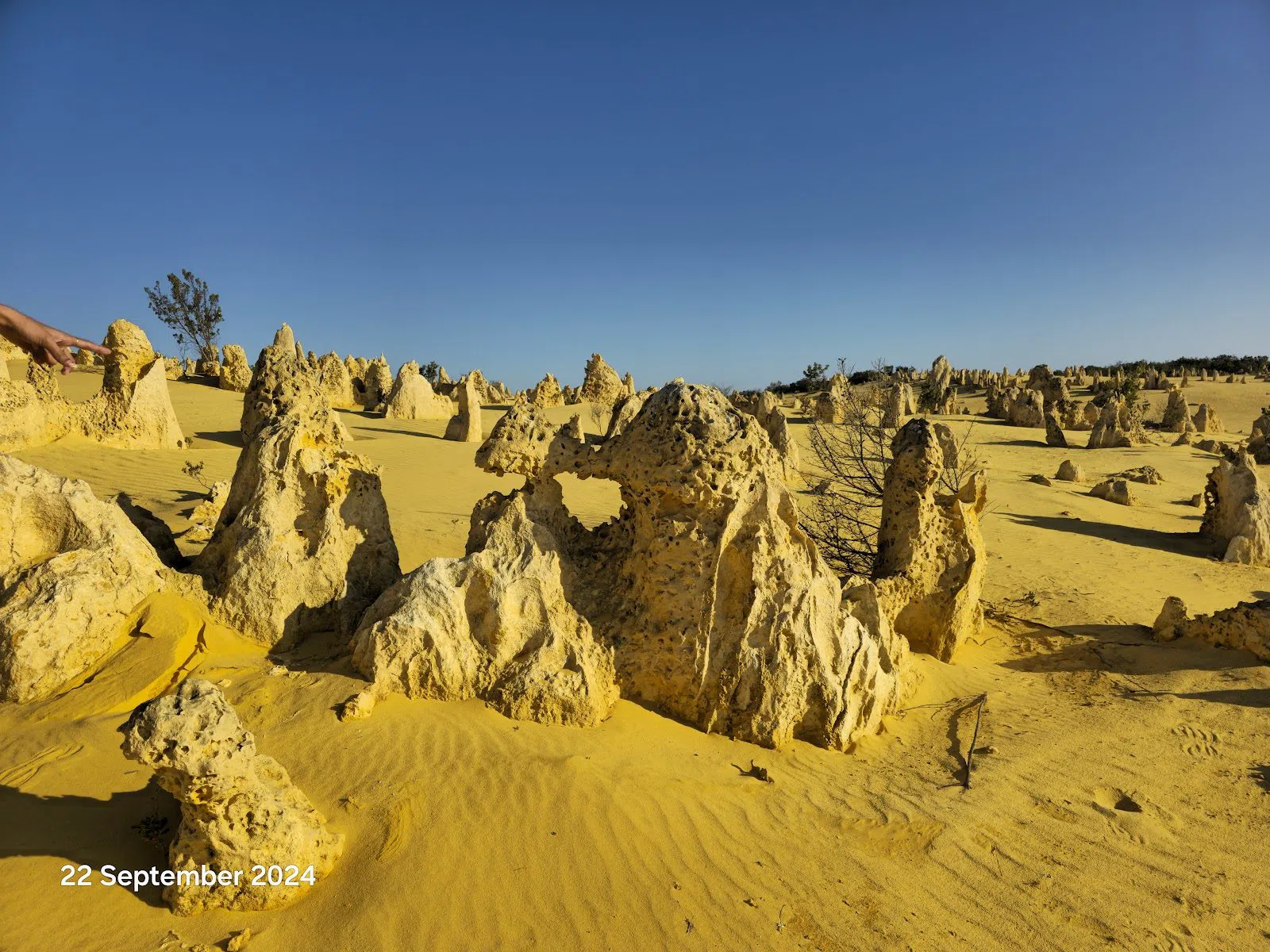
Nambung National Park (Pinnacles Desert) is two hours north, A$17 per vehicle, with a self-drive loop road and a Discovery Centre open daily 9.30am to 4.30pm. It is best walked in the cooler months, which spring still counts as, and best at either end of the day for the light. The limestone gets the photographs, but the surrounding sandplain is the wildflower story, carrying the north's bloom through spring; nearby Lesueur National Park alone holds over 800 plant species. Coach groups are routine here, so if you want the place quiet, drive yourself and arrive before the tour buses.
Australian Pinnacle Tours is the practical answer if you have not hired a car. One operator covers the long-haul days: the Pinnacles, Wave Rock with a historic wheatbelt town on the way, and Rottnest, with coach capacity, CBD hotel pick-up and drop-off, and reservations by phone on (08) 6270 6060. Expect roughly A$150 to A$250 per person for a full day. These are long days with fixed stop times, which suits people without a licence and does not suit anyone who wants to sit down in one valley for two hours.
Two soft days for when the weather turns
Spring here delivers rain, and a wet day flattens a wildflower walk. Have both of these in reserve.
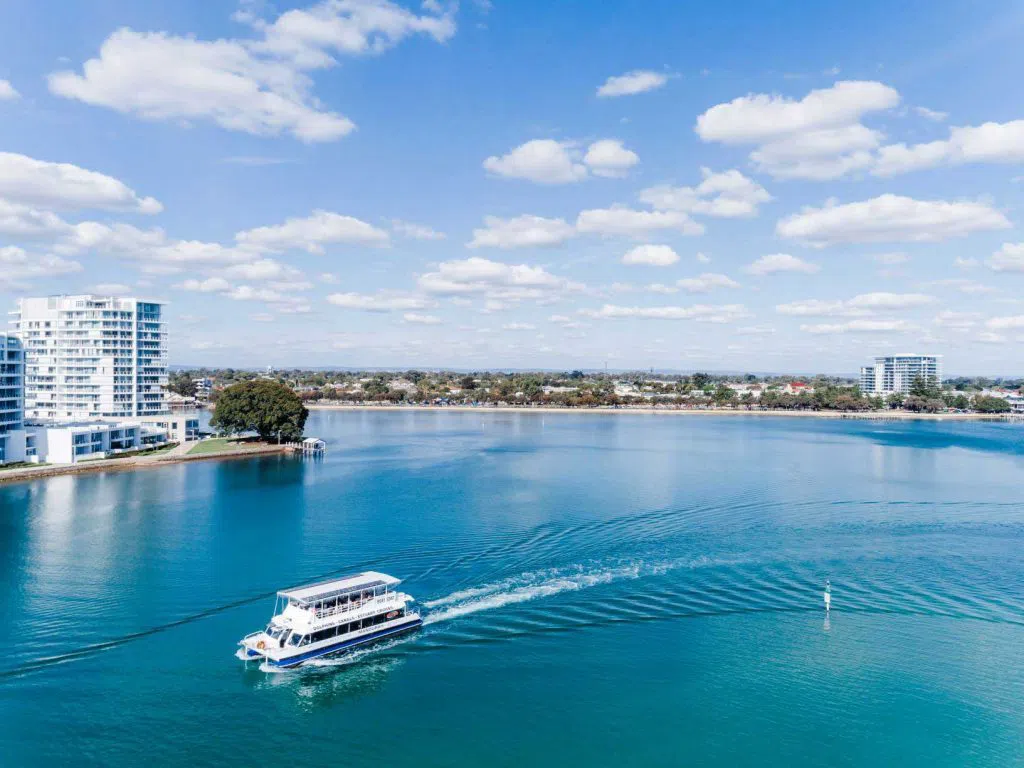
Mandurah Cruises runs an hour south of the city and is reachable on the southern rail line, which means no hire car and no wet driving. The one-hour dolphin and canal cruise costs about A$40 adult, with departures at 11.30am, 1.30pm and 3pm, plus a 10am run at weekends and in school holidays. There are more than 100 resident Indo-Pacific bottlenose dolphins in the estuary and a sighting guarantee, and marine guides give live commentary. Groups are taken readily across the multiple daily departures.
Rottnest Island is the other one, and spring is its best window: mild enough to cycle the whole island, whales moving past the west end, and the coastal heath in flower before the summer crowds. SeaLink runs frequent ferries from the city and from the port downriver on the Quokka 1, 2 and 3, at roughly A$70 to A$130 return including the island admission fee. Bike hire is extra and island bus passes can be booked in blocks, which is how to handle a group with mixed appetite for pedalling. Book the ferry the night before on a fine spring weekend.
Before you set out
A car is close to essential for the hills and the north. Kings Park, Bold Park and Wireless Hill are all reachable without one, and the dolphin cruise is on the train line, but Ellis Brook, Lesmurdie, John Forrest and Araluen effectively are not. If you are not driving, build the trip around the free city walks and use a coach operator for one long day rather than trying to stitch the rest together.
Park entry runs A$17 per vehicle at John Forrest, Yanchep, Serpentine and Nambung, and it is per vehicle rather than per person, so a full car is cheap and a solo driver is not. Three parks is A$51, so decide which two you actually want. Everything free stays free: Kings Park, Bold Park, Wireless Hill, Ellis Brook and Lesmurdie Falls together make a full and honest wildflower week for the cost of fuel. Cards work everywhere that is staffed, but carry a little cash for self-registration stations and the small paid tours.
On timing, the season runs roughly late August to October in and around the city, stretching to November on the John Forrest Wildflower Walk. Mid-September is the safest single week: the Kings Park festival is on from 18 September, Araluen's tulips have been open since 4 September 2026, and the orchids at Wireless Hill and Yanchep are still up. Walk in the morning, when the flowers are open and the light is better, because the wind picks up after lunch. Take layers and sun cover in the same bag; a spring day here does both.
For where to base yourself, the western suburbs put Kings Park and Bold Park within ten minutes and the hills within forty. Start with the Perth hotel search, and see the wider Perth guide for the rest of the city.
Before you go
When is wildflower season in Perth?
Around the city the season runs from late August to October, with mid-September the safest single week. Some sites stretch further: the 4.6km Wildflower Walk in John Forrest National Park peaks August to November, and orchids at Wireless Hill Park and Yanchep National Park are best August to October.
Where is the closest wildflower walk to central Perth?
Wireless Hill Park in Ardross is the closest serious patch. Three trails run from 700m to 3km, the Wildflower Walk is paved for wheelchairs and prams, and parking and toilets are free. Kings Park is closer still and free, with volunteer-guided walks from Fraser Avenue at 10am and 1pm daily.
Do I need a car to see the Perth wildflowers?
Not for the city walks. Kings Park, Bold Park and Wireless Hill are all reachable without one, and Mandurah Cruises is on the southern rail line. The hills sites (Ellis Brook Valley Reserve, Lesmurdie Falls, John Forrest and Araluen Botanic Park) realistically need a car, or one coach day with Australian Pinnacle Tours for the long-haul trips.
How much does park entry cost?
John Forrest, Yanchep, Serpentine and Nambung National Parks each charge A$17 per vehicle, not per person. Kings Park, Bold Park, Wireless Hill, Ellis Brook Valley Reserve and Lesmurdie Falls are free. Araluen Botanic Park is A$10 to A$20, and the Crystal Cave tour at Yanchep is about A$15 adult and A$8 child.
Can you still swim at Serpentine Falls?
No. Swimming has been closed since bacterial detections and stays off-limits, so treat Serpentine National Park as a walking and picnic stop. The park opens 8:30am to 5pm daily, entry is A$17 per vehicle, and the gates close once it reaches capacity, so arrive early or call ahead.